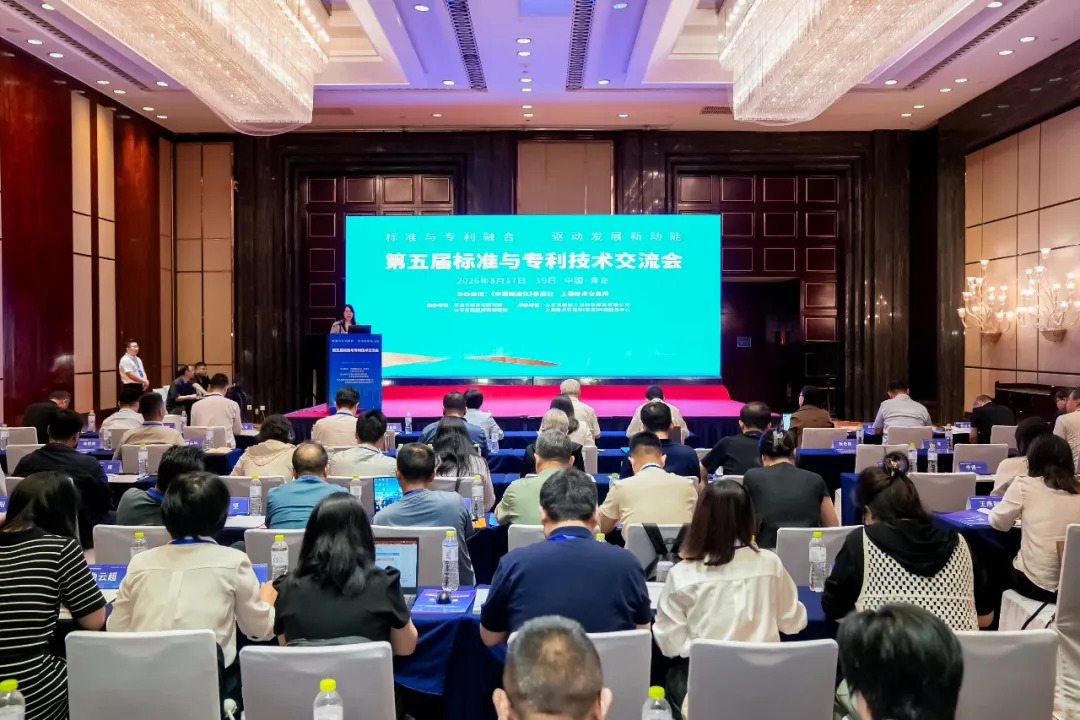
On 8 May 2026, the Ministry of Industry and Information Technology (MIIT), the Ministry of Commerce (MOC) and the State Administration for Market Regulation (SAMR) jointly published GB/Z 177-2026, Intelligence Grading of Artificial Intelligence Terminal and hosted a launch press conference in Beijing. This marks China’s first national standard series for grading the intelligence level of AI-enabled consumer devices. The project was approved in June 2025 and finalized in under a year, reflecting the political priority attached to the AI terminal market under national strategies such as the “AI+” Action Plan and the 15th Five-Year Plan.
The standards series has 9 parts and follows a “2+N” structure. The “2” establishes the general benchmark requirements and grading methodology for all AI terminals. The “N” provides product-specific standards for individual consumer categories. The initial release covers seven common product types, and further categories are expected to follow. The full series comprises:
- GB/Z 177.1 – 2026 Intelligence grading of artificial intelligence terminal—Part 1: Reference framework
- GB/Z 177.2 – 2026 Intelligence grading of artificial intelligence terminal—Part 2: General requirements
- GB/Z 177.3 – 2026 Intelligence grading of artificial intelligence terminal—Part 3: Mobile terminal
- GB/Z 177.4 – 2026 Intelligence grading of artificial intelligence terminal—Part 4: Microcomputer
- GB/Z 177.5 – 2026 Intelligence grading of artificial intelligence terminal—Part 5: Television
- GB/Z 177.6 – 2026 Intelligence grading of artificial intelligence terminal—Part 6: Glasses
- GB/Z 177.7 – 2026 Intelligence grading of artificial intelligence terminal—Part 7: Cockpit
- GB/Z 177.8 – 2026 Intelligence grading of artificial intelligence terminal—Part 8: Speaker
- GB/Z 177.9 – 2026 Intelligence grading of artificial intelligence terminal—Part 9: Earphone
The series is managed by the National Standardization Technical Committee of Information Technology (SAC/TC28), except for Parts 5 and 6, which fall under the National Standardization Technical Committee of Audio Video Multimedia System Equipment (SAC/TC242).
The standards’ central feature is a four-tier intelligence grading system, ranging from L1 to L4. Only L1 to L3 have been fully defined so far; L4 will be specified once the technology matures. The same four labels apply across all product categories, but the tests and thresholds are adjusted to match each device’s hardware capabilities and whether its AI runs on the device or in the cloud. Notably, the series draws almost exclusively on existing national standards, reflecting a strongly China-market-oriented approach.
At the standards launch press conference, Mr. Xiong Jijun, Vice Minister of MIIT, set out the Ministry’s implementation plan. To promote market uptake and refine the standards into a mature, unified evaluation framework, the Ministry and the responsible technical committees will roll out the standards across industry, encourage leading companies to trial them first, and use the feedback to improve their accuracy and usefulness. MIIT also plans to speed up work on a full standards system covering all terminal types, and to publish an AI terminal product catalogue that incorporates this standard. In addition, there is no official announcement of any plan to promote this series internationally as the time of writing this news article. The immediate impact of the standards may still be confined to the domestic market.
Although it is still a national technical guidance document, GB/Z 177-2026 is being piloted with leading firms alongside a planned product catalogue, pointing toward informal but influential market gatekeeping. The series may mature into a recommended national standard. The L1 to L3 grades are likely to become the primary benchmark for classifying products as moderately or highly intelligent in the Chinese market.
The standards remain at an early exploration stage. Despite their clear strategic weight under national policy, their concrete impact on AI-related industries, particularly consumer products, is still difficult to gauge. SESEC will continue to monitor the evolution of this standards series, evaluate its importance as it matures, and provide timely updates.
Source: https://wap.miit.gov.cn/xwfb/gxdt/sjdt/art/2026/art_9fd39c053e484ba4bec7863849213092.html