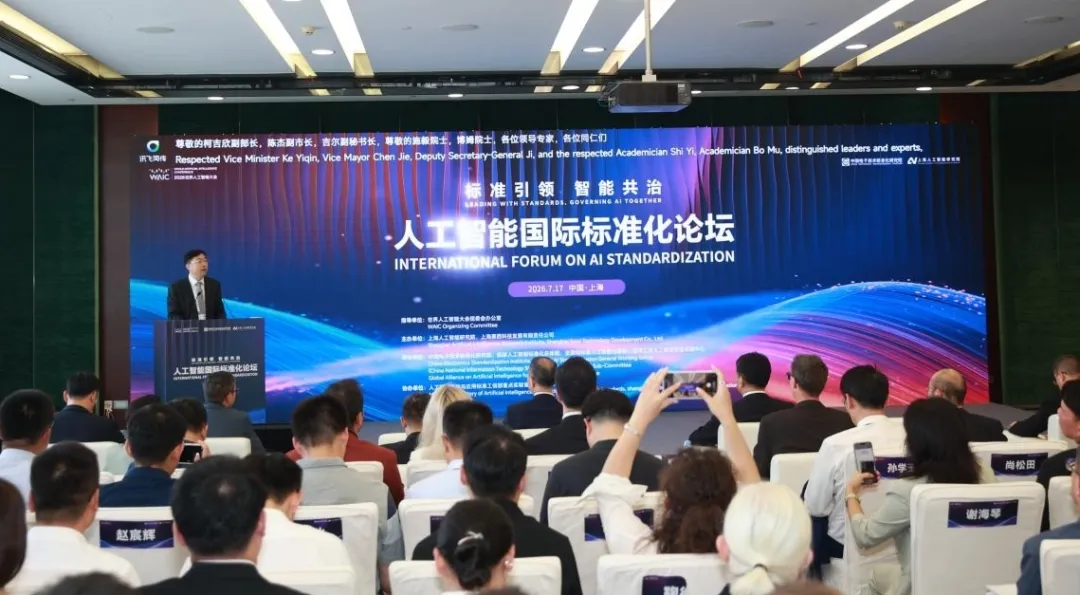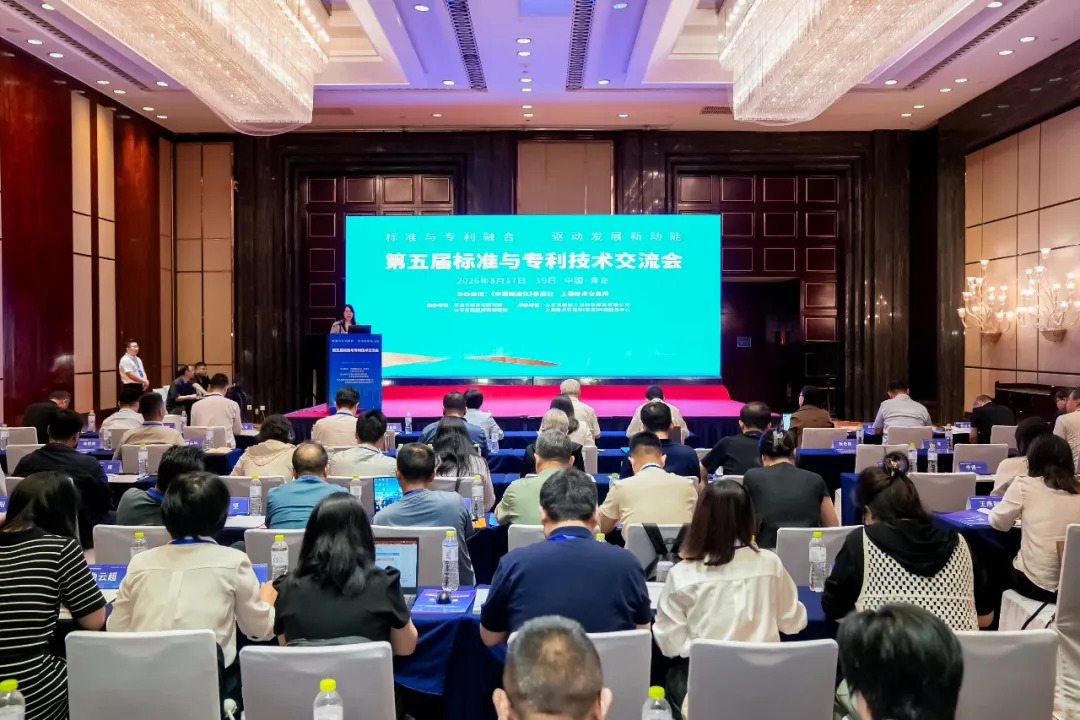
From 29 May to 9 June 2026, the National Information Technology Standardization Technical Committee (SAC/TC28) convened its fifth plenary meeting and the annual Standards Week. The event gathered over 2,000 experts from government agencies, research institutes, universities and industry.
At the opening plenary on 29 May, Deng Zhiyong, Administrator of the National Standardization Administration (SAC), and Xiong Jijun, Vice Minister of the Ministry of Industry and Information Technology (MIIT), delivered keynote speeches outlining the committee’s priorities for the 15th Five-Year Plan period. Both underscored the significance of accelerating standards iteration and advancing technological innovation in AI, cloud computing, IoT and other emerging and future industries. They also reaffirmed that forward-looking standardization should serve as the new paradigm, with a strengthened role for pre-research in this framework.
Following the plenary, the Standards Week proceeded with domain-specific sessions covering embodied intelligence, AI agents, computing interconnect bus, intelligent operating system and other priority areas.
SESEC has compiled a summary of key information from the Standards Week, covering embodied intelligence, AI terminals, computing interconnect bus (CLink), data communication, industrial data and intelligent operating system. SESEC’s observations are attached at the end of the article to summarize key takeaways.
Embodied Intelligence (TC28/WG 41)
The newly formed WG 41 convened 90+ representatives from robot manufacturers, research institutes, and application units.
The session reflected industry consensus that embodied intelligence is entering a critical window for industrial scaling, and that standardization is essential to drive technological innovation, industrial coordination, and large-scale application.
Key standards under discussion:
- 20262625-Z-469 Artificial Intelligence – Technical specifications for embodied intelligence simulation platform
- 20262626-Z-469 Artificial Intelligence – Technical requirements for embodied intelligence operating system
- 20262628-Z-469 Artificial Intelligence – Architecture and technical requirements of embodied intelligence collection-training-inference system
- 20262629-Z-469 Artificial Intelligence – General performance requirements and test methods for embodied intelilgence
Experts exchanged views on embodied intelligence technical architecture, simulation training, system capability evaluation, and security applications.
The working group will continue refining the embodied intelligence standards system, accelerate the development and application of key standards, and promote the deep integration of AI with the real economy to support industrial innovation.
AI Terminals (TC28)
On 1 June, 70+ experts from CESI, the China Academy of Information and Communications Technology (CAICT), the China Center for Information Industry Development (CCID), Huawei Terminal, iFlytek, UBTECH, and Hisense reviewed the GB/Z 177-2026 AI Terminal Intelligence Grading series.
Grading frameworks and scope discussed:
- Reference framework and general requirements
- Mobile terminals, PCs, TV receivers, smart glasses, vehicle cockpits, smart speakers, and smart headphones
iFlytek, Huawei Terminal, UBTECH, and Hisense shared industry feedback on emerging product categories such as learning devices, smart watches, smart toys, and projection displays. The committee plans to expand standards coverage to build a unified system spanning multiple scenarios and product categories.
The committee will strengthen standard promotion and implementation, further expand the AI terminal standard system to cover more scenarios and product categories, and support the high-quality development of the AI terminal industry.
Intelligent Agents (TC28/SC42)
On 2 June, over 100 participants from Zhongguancun Laboratory, China Financial Certification Authority (CFCA), Beihang University, and the Industrial and Commercial Bank of China (ICBC) reviewed the GB/Z 185-2026 Agent Interconnection series. Senior official from the MIIT Department of Science and Technology, delivered opening remarks
The MIIT Official noted that China’s intelligent agent industry is in a critical window for large-scale deployment, and stressed the need to strengthen standards supply in technology, trading, and evaluation, align with international standards, and promote Chinese standards globally.
Standards and topics discussed:
- GB/Z 185-2026 Artificial Intelligence – Agent Interconnection series, setting unified rules for cross-domain, cross-scenario, and cross-entity agent collaboration
- Data agent technical requirements
- Agent trading rules and digital trust mechanisms
- Agent memory evaluation systems
- Agent grading management, capability evaluation, and trusted trading
Specific standard projects discussed:
- Artificial Intelligence –Agent Skill Management (Standards project waiting for approval)
- 20262604-Z-469 Artificial Intelligence – Technical requirements of multi-modal agents – Evaluation metrics and method
- Artificial Intelligence – Technical requirements of agents for graphical user interface (Standards project waiting for approval)
The working group will advance the intelligent agent standard system, speed up the formulation and adoption of core standards, and build a comprehensive framework covering interconnection, capability evaluation, trading, and governance.
Computing Interconnect bus – CLink (TC28/SC28)
On 1 June, the CLink working group met with Jin Lei, Director of the Electronic Systems Division of the MIIT Department of Electronics and Information Technology, and Fan Kefeng, Vice President of CESI, in attendance. Dong Jian, Director of CESI’s Information Technology Research Center, chaired the session. Industry representatives from ZTE, Huawei, Moore Threads, Wuxi Zhongxing Microsystem, JD.com, and Yunnex (Shanghai) contributed application perspectives.
CLink protocol suite developments:
- Unified protocols for computing high-speed interconnect bus – General principles (standard drafting launched)
- 20262600-Z-469 Unified protocols for computing high-speed interconnect bus – Technical requirements for superpod interconnect with peer-to-peer architecture (standard drafting launched)
- Unified protocols for computing high-speed interconnect bus – Technical requirements for accelerator interconnection (supporting testing launched)
The working group will push forward with CLink standard drafting and supporting testing, advancing the construction of an autonomous and controllable computing infrastructure standards system.
Data Communications (TC28/SC6)
New project proposals and initiated national standard development approved recently has been discussed at Standards Week.
National standards proposals to be sumbitted:
- Information technology – Control network protocol – Part 2: Twisted pair communication
- Information technology – Semantic communication system architecture
- Information technology – WLAN sensing information exchange protocol and test methods
New national standard development launched:
- Information technology – Telecommunications and information exchange between systems – Unmanned aerial ad-hoc network (UAAN) – Part 1: communication model and requirements
Frontier topics discussed:
- Agent communication networks
- Computing power networks
- Embodied intelligence communications
- Space-based computing
- Mobile intelligent agent networks
SC6 will continue improving the data communications standards system, strengthen frontier research and international cooperation, and accelerate the conversion of technological innovations into standards to support digital infrastructure.
Industrial Data (TC28)
On 1 June, 50+ experts from CESI, Beihang University, and industry discussed high-quality industrial datasets.
Key documents under development:
- Industrial high-quality dataset – Construction guidelines (standard)
- Industrial high-quality dataset – Practice guide (report)
Topics covered:
- Industrial data acquisition specifications
- Data quality evaluation
- Data validation and iterative optimisation mechanisms
- High-quality dataset construction pathways
The drafting team will finalise the Industrial High-Quality Dataset Construction Guidelines and Practice Guide, providing standards and practical references to support high-quality dataset construction and AI integration in industrial scenarios.
Intelligent Operating Systems (WG 30)
On 2 June, the Operating Systems WG 30 gathered nearly 70 experts from 40+ organisations, including CESI, Xiaomi, Huawei, ZTE, Kylin, and UnionTech.
Core standards under development:
- 20263105-Z-469 General technical requirements for artificial intelilgence oeprating system
– Defines the AI OS scope and reference framework
– Specifies technical requirements for the kernel layer, system service layer, framework layer, and application layer
- 20263106-Z-469 Artificial intelligence operating system permission management requirements
– Permission architecture and full-lifecycle management for agent scheduling
– Guidance for OS developers
Experts discussed the standards framework, scope of application, definition boundaries, dynamic permission management, and cross-application collaborative security.
The working group will collaborate with industry partners to accelerate AI OS standard development, fostering the integration of AI and foundational software to support industrial innovation and ecosystem building.
SESEC Observation
TC28 is one of China’s largest and most influential standardization committees, administered by MIIT and jointly guided by SAC and MIIT. It is the mirror committee of ISO/IEC/JTC01 in China and the fundamental TC for IT industry.
This year’s committee renewal coincides with the launch of the 15th Five-Year Plan, enabling its standardization priorities to align closely with national strategy—imbuing this Standards Week with exceptional policy significance. The volume and prominence of AI-related discussions signals AI as the committee’s highest-priority focus area under its new mandate, centered on two core objectives: advancing AI-enabled industrial transformation and achieving breakthroughs in AI infrastructure, particularly high-performance computing hardware critical to large-scale AI deployment.
A potentially underappreciated shift is the accelerating move toward more agile and iterative standardization processes. This year, SAC prominently elevated two GB/Z documents—GB/Z 177-2026 AI Terminal Intelligence Grading and GB/Z 185-2026 Agent Interconnection —at its official launch press conference, framing them as early-stage prototypes to operationalize the “AI+” Action Plan’s high-level objectives. Historically, voluntary GB/Z guidance documents received limited attention due to their non-binding status. However, they are increasingly serving as steppingstones toward formal national standards (GB/GB/T) and may underpin future market access requirements. Foreign stakeholders should no longer assess China’s standards solely by their current classification; instead, they must adopt a forward-looking, iterative perspective and engage early to influence developments in ways that align with their interests.