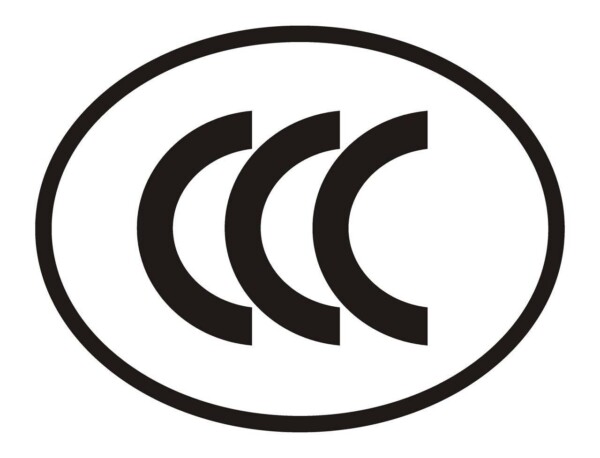
On April 16, 2026, the National Certification and Accreditation Administration (CNCA) officially released 11 sets of compulsory product certification (CCC) implementation rules for products ranging from fuse-links to automotive safety glass. The new rules, which respond to the State Administration for Market Regulation Announcement No. 57 of 2025, a measure that replaces self-declaration with mandatory third-party certification for 16 product categories (See more details from our previous news coverage), will take effect on July 1, 2026.
The 11 implementing rules, all designated as “trial” versions, are as follows:
- CNCA-C02-02:2026 – CCC Implementation Rules for Fuse-Links (Trial)
- CNCA-C04-01:2026 – CCC Implementation Rules for Small-Power Motors (Trial)
- CNCA-C05-01:2026 – CCC Implementation Rules for Electric Tools (Trial)
- CNCA-C06-01:2026 – CCC Implementation Rules for Welding Machines (Trial)
- CNCA-C11-04:2026 – CCC Implementation Rules for Automobile Safety Belts (Trial)
- CNCA-C11-07:2026 – CCC Implementation Rules for External Lighting and Light-Signaling Devices on Motor Vehicles (Trial)
- CNCA-C11-08:2026 – CCC Implementation Rules for Indirect Vision Devices on Motor Vehicles (Trial)
- CNCA-C11-12:2026 – CCC Implementation Rules for Automotive Seats and Head Restraints (Trial)
- CNCA-C11-13:2026 – CCC Implementation Rules for Retro-Reflective Markings on Vehicle Bodies (Trial)
- CNCA-C11-14:2026 – CCC Implementation Rules for Vehicle traveling Data Recorders (Trial)
- CNCA-C13-01:2026 – CCC Implementation Rules for Safety Glass (Trial)
The 16 products listed in Announcement No. 57 of 2025 are governed by 11 implementing rules, as some rules cover multiple products. For example, the rule for electric tools applies to three products (drills, electric grinders and rotary hammers), while the rule for welding machines covers four (DDC arc welding machines, TIG arc welding machines, MIG/MAG arc welding machines, plasma arc cutting machines). The remaining rules each apply to a single product.
The 11 rules share a uniform certification model: type testing, initial factory inspection, and post-certification surveillance. Several rules also specify clear exclusions. For example, the rule for automobile safety belts excludes seat belt components such as webbing, retractors and buckles; the rule for external lighting excludes lamp assembly components including reflectors, lenses, and bulbs; and the rule for automotive seats and head restraints excludes rear-facing seats, child seats, sleeper berths, seat frames, trim covers, and head restraint frames. Notably, the rule for small-power motors applies to voltages above 36V and below 1,000V AC or 1,500V DC — a range companies should verify carefully. Additionally, the safety glass rule now extends to architectural safety glass, beyond automotive applications.
European companies exporting affected products to China should act now to transition from self-declaration to third-party certification. It is advisable to engage with accredited Chinese certification bodies, conduct pre-testing against the corresponding standards, and ensure full compliance ahead of the July 1, 2026 deadline.
Source: https://www.cnca.gov.cn/zwxx/gg/2026/art/2026/art_28b7746f4ad74ad3b7ca104b124e4ac9.html