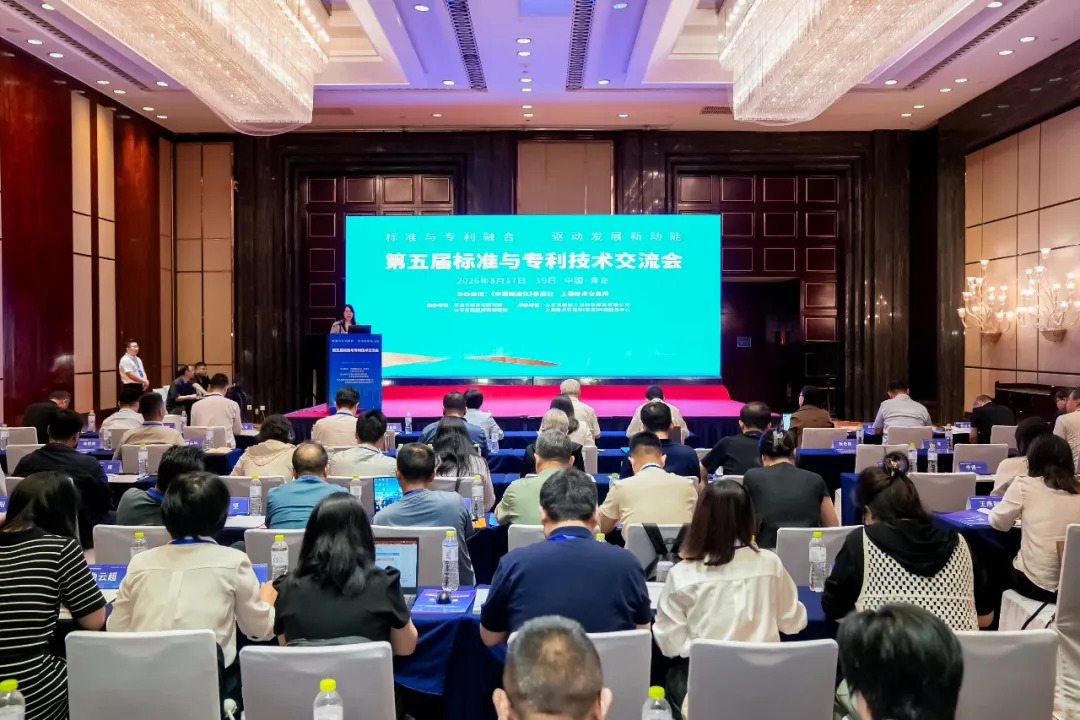
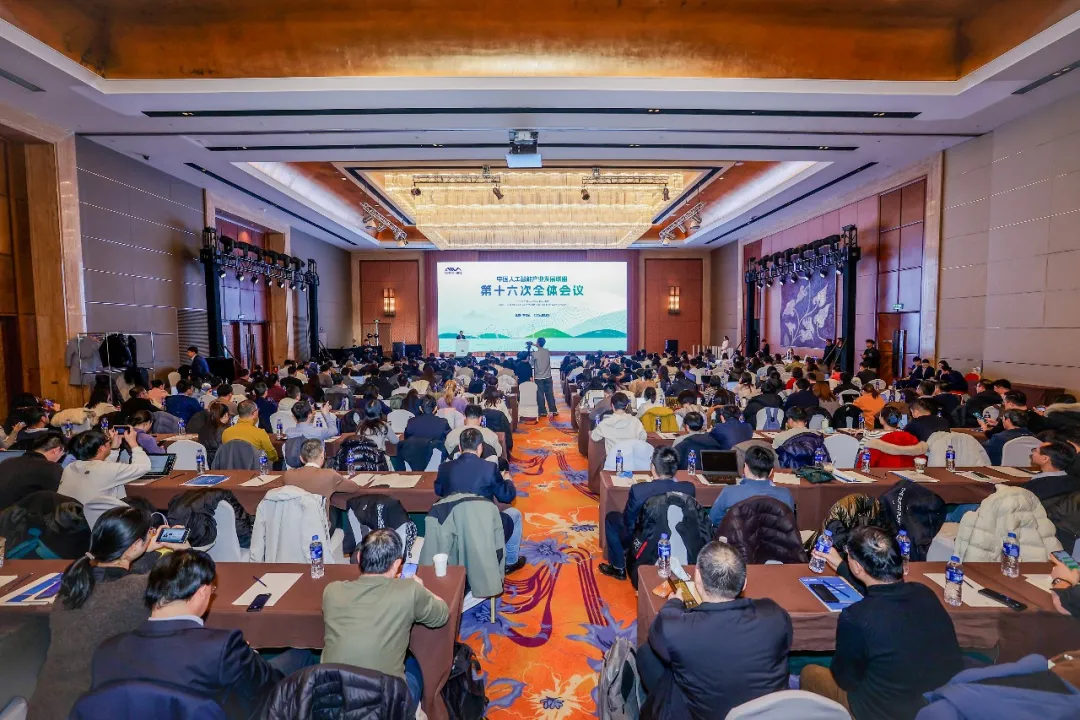
On 3 February 2026, China’s Artificial Intelligence Industry Development Alliance (AIIA) held its 16th Plenary Meeting in Beijing. The event drew a wide range of stakeholders, including senior government officials, industry leaders, and academic experts.
Distinguished attendees included Wang Jiangping, former Vice Minister from Ministry of Industry and Information Technology (MIIT), and Chair of the AIIA Strategic Committee; Gan Xiaobin, Deputy Director-General of Science and Technology Department from MIIT; Yu Xiaohui, President of the China Academy of Information and Communication Technology (CAICT); Ye Huiqing, Chief Accountant and former Deputy General Manager from COFCO Corporation(a stated-owned agri-food company in China); and Gao Tongqing, Vice Chair of the Science and Technology Committee at China Mobile and Vice Chair of the AIIA Strategic Committee.
More than 300 delegates from AIIA member organizations and related sectors attended in person. Wu Tongning, Vice President of the Artificial Intelligence Research Institute of CAICT, hosted the opening ceremony.
Setting the Policy Agenda for AI
Gan Xiaobin delivered a keynote speech and reaffirmed MIIT’s dedication to the government’s broader strategy, positioning the manufacturing sector as the primary arena for AI application. He outlined 4 strategic priorities:
- Reinforce the technological foundation through breakthroughs in critical areas such as AI chips and industrial-grade large models;
- Cultivate a more robust application ecosystem by advancing standardization’s leading role and fostering a vibrant open-source culture;
- Deepen international collaboration by engaging more actively in multilateral forums including the UN, BRICS, and ASEAN;
- Strengthen application governance through innovating security tools and reinforcing industry self-regulation.
He called on AIIA to amplify its role in shaping a globally competitive industrial landscape.
Yu Xiaohui noted that, propelled by the “AI+” initiative, China’s core AI industry is projected to exceed RMB 1.2 trillion. Reflecting on 2025, he identified 4 major technological trends as key drivers of new productive forces and emerging intelligent economic models: large models, demands for computing power, intelligent agents, and embodied intelligence. He also highlighted AIIA’s accomplishments over the past year in ecosystem development, standard-setting, industrial services, and international engagement. Looking to 2026, he outlined 5 focal points for the Alliance:
- Establish a national testing and validation platform to spur innovation;
- Create a repository of high-value application scenarios to deepen industrial adoption;
- Foster tighter integration between chip development and model creation, alongside closer industry-finance ties;
- Enhance support for domestic industries expanding overseas and broadening international partnerships; and
- Reinforce industry self-discipline to fortify security and governance frameworks.
Wang Jiangping delivered a keynote speech offering an interpretation of the recent special action plan for ‘AI+Manufacturing‘. ” He framed “AI+” as the essential pathway for converting artificial intelligence into tangible productive force, with manufacturing serving as the critical arena for translating scenario advantages into intelligent capabilities. The action plan sets ambitious targets for 2027. Its implementation will concentrate on 5 core areas:
- Construct an autonomous and controllable full-stack technology architecture;
- Advance comprehensive and profound industrial applications;
- Develop a high-level AI technology and application ecosystem;
- Shape international competitive advantage; and
- Reinforce security guarantees.
New Initiative
The “Joint Initiative for Green AI Development and Application” was formally announced. Its objectives include bolstering green computing infrastructure, promoting environmentally sustainable AI hardware and software, establishing international standards and benchmarks, fostering a comprehensive green AI ecosystem, creating demonstrative application scenarios, and building a multi-stakeholder governance framework.
Research Outcomes
AIIA unveiled 6 significant research outputs:
- AI Software and Hardware AISHPerf Benchmark Tool 2026Q1: Designed to offer technical optimization guidance and inform product selection for both suppliers and users.
- AI Safety Benchmark 2.0 Testing System: A comprehensive safety evaluation framework built upon the independently developed large model security testing platform.
- Research Report on Industry Digital Intelligence AI Security Practices: Provides forward-looking analysis on the evolution of AI security.
- Research Report on Algorithm Governance for Industries: Proposes a trust-centred governance framework for algorithms, emphasizing transparency, data protection, fairness, and content integrity.
- Research Report on the Roadmap for Implementing Intelligent Agents in the Insurance Industry (2025):Systematically assesses the current state of agent technology and applications within the insurance sector.
- Practical Guide to AI-Empowered Applications:Outlines actionable steps for implementing AI solutions, offering a reliable reference for deployment.
Wei Kai, Head of the AIIA General Group, presented the Alliance’s annual report. AIIA now encompasses 1,439 member organizations and 45 working groups. In 2025, it established a Strategic Committee, welcomed 337 new members, hosted 223 industry events, published 13 research reports and 58 technical specifications, and developed multiple testing frameworks. For 2026, AIIA’s efforts will concentrate on 5 pillars: technological innovation, industry application depth, ecosystem coordination, open collaboration, and security governance.
Organizational Updates
In 2025, AIIA formed 3 new working groups dedicated to Agriculture and Rural Areas, Smart Ports, and AI Application Service Providers. Intelligent Software Engineering Working Group was upgraded to the Software Intelligence Committee.
The plenary built consensus and provided a collaborative platform for advancing the “AI+” initiative. AIIA will continue driving innovation and application to support the development of a modern industrial system.