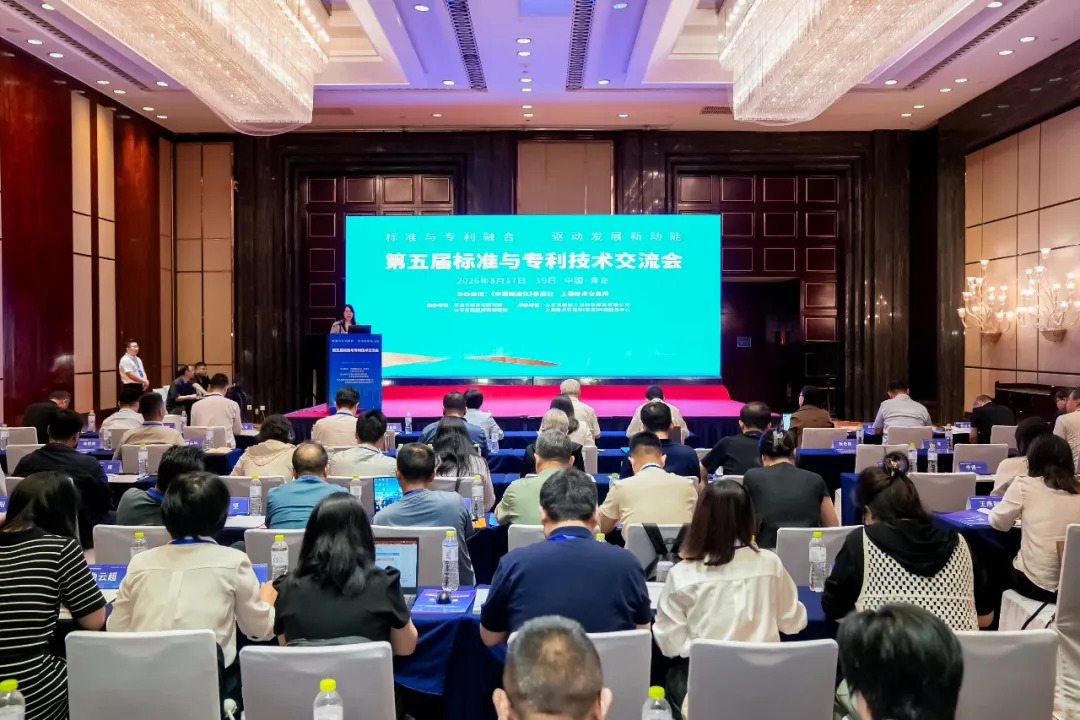
On 17 July 2026, the International Forum on AI Standardization was held at the Shanghai World Expo Centre as part of the 2026 World Artificial Intelligence Conference (WAIC). Organised by the Shanghai Artificial Intelligence Research Institute and hosted by the China Electronics Standardization Institute (CESI), the forum brought together senior policymakers, leading academics, and standardisation experts from China, Europe, and beyond.
The event was attended by high-level representatives including Vice Minister Ke Jixin of the Ministry of Industry and Information Technology (MIIT) and UN Under-Secretary-General Amandeep Singh Gill. European participation included the European Committee for Standardization (CEN), the British Standards Institution (BSI), the UK Foreign, Commonwealth & Development Office, and the Russian Academy of Sciences, alongside delegates from the United States, Australia, and Norway. SESEC also participated in the forum.
The forum’s theme “Leading with Standards, Governing AI Together” underscored the growing consensus that AI governance and technical standards are inseparable, and that international cooperation is essential to bridge laboratory benchmarks with real-world industrial deployment.
Key Deliverables & Initiatives Launched
The forum saw the release and launch of several major standardisation deliverables:
- QiuSuo AI Benchmark Suite 2.0 (International Version)
This ia an updated, open benchmarking framework covering computing power, large language models, AI agents, and embodied intelligence.
Jointly released by CESI, the National Health Commission, China National Offshore Oil Corporation, China Unicom, China Telecom, Huawei, Baidu, and others, it aims to provide an objective and comprehensive evaluation standard for AI systems and promote international mutual recognition of evaluation results.
- Global Guidelines on Industrial Embodied Intelligence
Officially launched by CESI, the Shanghai AI Research Institute, BSI, the Russian Academy of Sciences, and industry partners. The guidelines will address core technical and governance dimensions such as environmental perception, autonomous planning, multi-agent collaboration, human-machine interaction, and functional safety & ethics in industrial embodied AI.
- AI Agent Interconnection Standards (Chinese & English Versions) & AIMM Framework
Jointly published by CESI, Peking University, the National Health Commission of China, Shanghai AI Research Institute, and leading industry partners from finance, telecommunications, electronics sector and others. The Agent Interconnection standards define overall architecture, identity management, capability description, and interaction protocols, with open-source code implementations to ensure compatibility with existing global agent protocols.
The AI Enterprise Intelligence Maturity Assessment Model (AIMM) extends ISO/IEC 42001 to provide a quantitative, multi-dimensional framework for enterprises to assess their AI maturity.
- Research Reports on Agentic Transactions in E-Commerce and AI Agent Ethical Governance
Published by CESI, Peking University, Peking University Wuhan AI Research Institute, and Alibaba. The reports explore rule-building for agent-mediated commerce and the ethical boundaries and governance frameworks needed as AI agents rapidly commercialise.
- Global Standardization Partnership Program for Trustworthy AI Ecosystem
Launched by CESI, the Shanghai AI Research Institute, UNIDO Global Alliance on AI for Industry and Manufacturing, TÜV SÜD, Microsoft China, and others. The initiative will explore standardisation practices for building a trustworthy AI service ecosystem.
European Perspective and Global Dialogue
The European Perspective was represented by Dr. Sebastian Hallensleben, Chair of the CEN-CENELEC Joint Technical Committee 21 (JTC 21) on Artificial Intelligence. In his presentation, Evolving AI Standardization in Europe: From Regulatory Alignment to Market Empowerment, he noted that standardisation must now pivot from regulatory support toward market enablement. He proposed the AI Solution Quality Index (ASQI)—a use-case-oriented, non-binary rating system built on approximately 20 indicators. Designed to provide a common quality language for all stakeholders, the ASQI aims to activate procurement and competition mechanisms, turning standards into catalysts for innovation.
The forum also convened an in-depth roundtable dialogue titled “Bridging the Intelligence Divide: AI Governance and Standards Capacity Building for Emerging Economies.” Chaired by Professor Zhang Ping of Peking University, the session brought together Dushyant Sanathara, Global Commercial Operations Director for AI from the BSI, Andrey Dmitrievich Tsoi, Deputy Director of the Laboratory for Artificial Intelligence Technology Quality at the All-Russian Institute for Scientific and Technical Information, Russian Academy of Sciences, and Zhang Shizong, Deputy Director of the Information Technology Research Center of CESI, and other representatives from industry and academia.
The discussion covered standards system development, governance capacity building, technical mutual recognition mechanisms, and pathways for international collaboration.
Participants agreed on the need to strengthen the cultivation of young standardisation talent, promote the simultaneous development of domestic and international standards, and explore mutual recognition pathways for testing and evaluation.
They also noted that sector-specific standards are urgently required in critical infrastructure domains, and stressed the importance of open collaboration, inclusive co-governance, lowering barriers to participation, and respecting differences in national development contexts in order to build a fair, diverse, and inclusive global governance system.
Next step
As China’s lead body for electronics and AI standardisation, CESI used the forum to outline its ongoing contributions to international standardisation bodies and to call for deeper collaboration in global AI governance. Moving ahead, CESI will build on its role within China’s National AI Standardization General Group and SAC/TC28/SC42 to further deepen international cooperation. The institute is committed to advancing an open, collaborative, and inclusive global standards ecosystem — harnessing standards to guide collective AI governance and to support the safe, healthy, and high-quality development of the global AI industry.
If you need more information on the particular outcomes from this forum, please contact us via email (assistant@sesec.eu).