On April 8, 2026, the Multilateral Roundtable on Energy Efficiency Standards and Labels was convened in Beijing by the appliances efficiency organization Collaborative Labeling and Appliances Standards Program (CLASP), with guidance from China’s State Administration for Market Regulation (SAMR).
The meeting brought together representatives from Brazil’s Ministry of Mines and Energy (MME), India’s Bureau of Energy Efficiency (BEE), the China National Institute of Standardization (CNIS), the Energy Research Institute of China’s National Development and Reform Commission (NDRC), and CLASP headquarters along with its Brazil and India country teams. Participants exchanged views on global energy conservation policies and practical experiences in appliance efficiency labeling.
Addressing the delegates, CNIS President Wang Kun highlighted energy efficiency standards and labels as fundamental policy tools for driving green and low-carbon transformation, calling for deeper international cooperation and continuous upgrading of these mechanisms. Experts from China, Brazil, and India presented national energy policies, the evolution of efficiency labeling schemes, and emerging trends in cooling equipment efficiency. Participants agreed that the dialogue laid a solid foundation for future cross-regional collaboration, particularly in the refrigeration sector. Foreign representatives expressed strong interest in establishing long-term peer-learning mechanisms with CNIS and other Chinese institutions.
The roundtable was highlighted by SAMR as an important practice in advancing the “soft connectivity” of rules and standards – a key concept in China’s international cooperation framework. It is expected to help Belt and Road partner countries achieve greater regulatory alignment and capacity building in the green and low-carbon field, contributing Chinese expertise to global sustainable development.
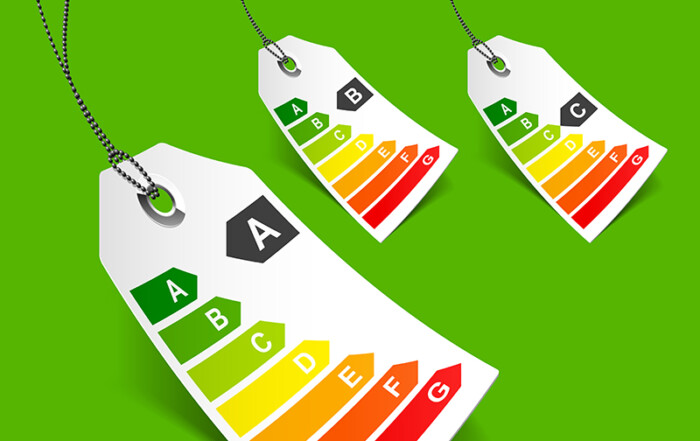
China’s energy efficiency labeling program, jointly administered by NDRC and SAMR, requires covered products to display a uniform label indicating energy performance levels. On April 30, 2026 – just three weeks after the Beijing roundtable – NDRC and SAMR officially released the China Energy Label Product Catalogue (2026 Edition) and Relevant Implementation Rules. Compared to the earlier draft (see details from our previous news coverage), the final version maintains the same scope and framework. The key changes include mandatory deadlines for washing machines and washer-dryers (April 1, 2027) and indoor LED lighting (September 1, 2027), clarified scope and registration unit rules for projectors and other products.
In light of the Beijing Energy Efficiency Roundtable and the update to the China Energy Label Product Catalogue (2026 Edition), European enterprises should first assess the gap between their existing products and the higher efficiency standards, particularly given the mandatory implementation deadlines for products such as washing machines and LED lighting. They may also engage with Chinese institutions like CNIS to share European expertise on testing and grading, facilitating technical alignment and helping reduce future compliance costs.
For those interested in China’s energy efficiency labeling system, please refer to our webinar slides of China Energy Labelling 2025: Regulations and Standards as of 2025.
Source: https://www.cnis.ac.cn/bydt/zhxw/202604/t20260410_62759.html
https://www.yidaiyilu.gov.cn/p/0TEI6H2V.html
https://www.ndrc.gov.cn/xxgk/zcfb/ghxwj/202604/t20260430_1404998.html