On 12 February 2026, the Department of Equipment Industry I of the Ministry of Industry and Information Technology (MIIT) launched a Call for Comments on revisions of 4 mandatory national standards and formulation of 1 mandatory national standard.
In accordance with the Standardization Law of the People’s Republic of China and the Measures for the Administration of Mandatory National Standards, MIIT has mandated the National Technical Committee of Auto Standardization (TC114) to undertake these 5 standards projects. Their drafts for comments have now been released and is open for feedback from all sectors of society. The deadline for submitting comments is 13 April 2026.
The table below lists the standards subject to this Call for Comments. You can find a concise summary of the key takeaways provided beneath the table, with original Chinese draft attached. If you have any additional request regarding these standards and the Call for Comments, please send a email to assistant@sesec.eu
| Project Code. | Name of the Standard | Standard to Replace |
| 20256778-Q-339 | Intelligent and connected vehicle — Safety requirements for automated driving system | GB/T 44721—2024 |
| 20253207-Q-339 | Symbols for controls, indicators and tell-tales of motor vehicles | GB 4094-2016 |
| 20243084-Q-339 | Performance Requirements and Testing Methods for Brake Assist Systems (BAS) of Light Vehicles | No standard to replace. It is a new mandatory standard. |
| 20253208-Q-339 | Performance and installation requirements of rear-views mirrors for motorcycles and mopeds | GB 17352-2010 |
| 20253206-Q-339 | Structure requirements of low floor public bus and low entry public bus | GB 19260-2016 |
Key Takeaways from each standard
- 20256778-Q-339 Intelligent and connected vehicle — Safety requirements for automated driving system
To address public safety concerns regarding self-driving cars, this standard has been upgraded from voluntary (GB/T) to mandatory (GB) to establish a robust regulatory framework.
The standard specifies technical requirements, safety assurance specifications, and compliance criteria for Level 3 (L3) and Level 4 (L4) Automated Driving Systems (excluding Automated Parking Systems) for M and N category vehicles. It describes methods for assurance verification, safety file assessment, and confirmation testing. Core aspects include dynamic driving task execution, human-machine interface, and user information.
Relationship with International Standards: The drafting process closely followed and referenced the UN Global Technical Regulation (GTR) on Automated/Autonomous Driving Systems (ADS) and UN Regulation No. 157 (ALKS).
Transition Period:
- For new model types applying for type approval: From the implementation date (proposed as July 1, 2027).
- For model types already holding type approval: The 13th month after the implementation date.
DRAFT – Intelligent and connected vehicle — Safety requirements for automated driving system
- 20253207-Q-339 Symbols for controls, indicators and tell-tales of motor vehicles
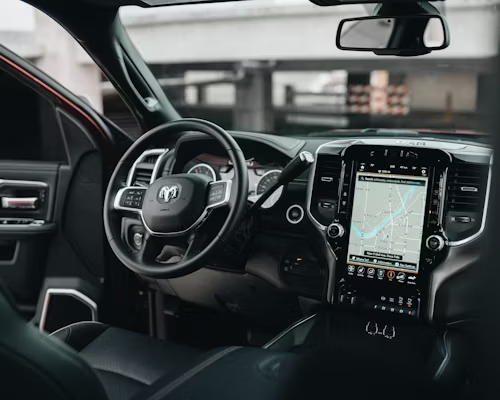
Due to vehicle electrification and intelligentization, new functions and display methods (especially large screens) have rendered the 2016 standard inadequate. This revision unifies symbols for new functions and enhances driving safety (e.g., ensuring critical controls are operable by feel). The revised standard applies to M and N category vehicles.
Key Revisions: adding mandatory symbols for several intelligent and electric vehicle functions; clarifying technical specifications for physical controls (size, feedback); and refining regulations for shared display spaces.
Relationship with International Standards: The revision is based on UNECE R121 and ISO 2575:2021 Road vehicles – Symbols for controls, indicators and tell-tales. Most mandatory symbols align with UNECE R121, with several additions reflecting China’s specific context (e.g., symbols for various EV and ICV functions).
Transition Period:
- For new model types applying for type approval: Provisions related to physical controls(Clause 4.1.11 & 4.1.12) take effect from the 13th month after implementation; other clauses are effective upon implementation (proposed January 1 2027).
- For model types already holding type approval: The 19th month after implementation.
DRAFT – Symbols for controls, indicators and tell-tales of motor vehicles
- 20243084-Q-339 Performance Requirements and Testing Methods for Brake Assist Systems (BAS) of Light Vehicles
As a new mandatory standard, this document specifies performance requirements and test methods for Brake Assist Systems (BAS) to improve vehicle safety by reducing stopping distance in emergency situations. It applies to M1 and N1 vehicles.
Key Provisions: It defines two BAS types (A and B) and specifies corresponding performance criteria and detailed test procedures. It requires vehicles to be equipped with an Anti-lock Braking System (ABS) and mandates that the BAS’s effectiveness is not compromised by factors like vibration, corrosion, or electromagnetic fields.
Relationship with International Standards: This standard is technically aligned with UN Regulation No. 139 (UN R139) and its amendments.
Transition Period:
- For new model types applying for type approval: From the implementation date (proposed as January 1, 2028).
- For model types already holding type approval: January 1 2029
DRAFT – Performance Requirements and Testing Methods for BAS of Light Vehicles
- 20253208-Q-339 Performance and installation requirements of rear-views mirrors for motorcycles and mopeds
This revision of GB 17352-2010 addresses technological developments in rear-view mirrors (e.g., multi-function integration), enhances safety, and improves alignment with international and related domestic standards. It applies to rear-view mirrors for motorcycles and mopeds.
Key Revisions: clarifying the scope to exclude vehicles with enclosed driver compartments; adding requirements for protrusions and aspherical reflective surfaces; refining test conditions for impact and bending resistance; and introducing new field of view requirements for the driver.
Relationship with International Standards: References were made to UN R46 and UN R81. Requirements are largely consistent with major international standards regarding reflectivity and impact resistance.
Transition Period:
- For new vehicle/rear-view mirror types applying for type approval: From the implementation date (proposed as January 1, 2027).
- For vehicle/rear-view mirror types already holding type approval: The 13th month after the implementation date.
DRAFT – Performance and installation requirements of rear-views mirrors for motorcycles and mopeds
- 20253206-Q-339 Structure requirements of low floor public bus and low entry public bus
This revision of GB 19260-2016 is necessary to adapt to advancements in bus technology, safety developments, evolving market demands, and updates to referenced standards. It applies to Class A and Class I low-floor and low-entry city buses of categories M2 and M3.
Key Revisions: expanding the scope to Class A buses; adding requirements for driver compartment segregation facilities and passenger door emergency controls; mandating emergency windows in wheelchair parking areas; and enhancing requirements for driver compartment ergonomics and accessibility facilities.
Relationship with International Standards: Developed considering China’s national conditions while aiming for harmonization with UN R107.
Transition Period:
- For new model types applying for type approval: From the implementation date (proposed as July 1, 2027).
- For model types already holding type approval: The 13th month after the implementation date.
DRAFT – Structure requirements of low floor public bus and low entry public bus
Source: https://wap.miit.gov.cn/gzcy/yjzj/art/2026/art_6a0b136cf5be4a4c8aa50511870508dc.html