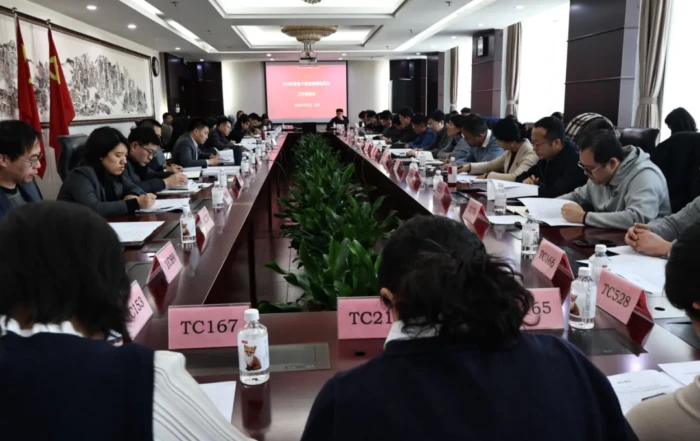

On 13 February 2026, the Ministry of Industry and Information Technology (MIIT) launched a Call for Comments on proposals to establish 11 new standardization technical committees. Deadline of the Call for Comments is 14 March 2026.
The initiative aims to build a more systematic and forward-looking standards system to support industrial modernization. The proposed committees covers a wide spectrum of strategic sectors, including intelligent manufacturing, advanced technologies, radio, industrial software, industrial data, machine tools, fundamental components, bio-manufacturing, ships and marine engineering, pharmaceuticals, and superabraive materials.
Key Summary of Each Proposal
- MIIT/TC Intelligent Manufacturing
Secretariat: China Electronics Standardization Institute (CESI)
Technical Scope: Common technologies, supply, application and evaluation for intelligent manufacturing
Activity Scope:
- Track standardization needs of industries.
- Formulate, review,and revise sector standards.
- Support application of intelligent manufacturing technologies in real factories.
- Promote standards and support cultivation of smart factories.
- International cooperation.
Proposed Work Programme after establishment:
- Research standardization needs and develop standards system for intelligent manufacturing
- Develop urgent standards to accelerate scaling of intelligent manufacturing technologies.
- Promote standards to industries and enterprises and build a cluster of standards to guide industrial development.
- Participate in international standardization organization and explore new possibilities for standards cooperation or mutual recognition via multilateral or bilateral cooperation mechanisms such as BRICS and Sino-German Intelligent Manufacturing.
- TC Advanced Technologies
Secretariat: CESI
Technical Scope: Generic standards for advanced technologies including all-round management, fundamental commonalities, and applied implementation.
Activity Scope:
- Research and propose on fundamental and generic sector standards for advanced technologies. Formulate, review and revise relevant standards.
- Conduct comparative analysis for generic standards and participate in formulation, revision and review of sector standards of other relevant fields.
- Promote standards and provide training. Track international standardization development.
Proposed Work Programme after establishment:
- Strengthen research of basic theories, standardization needs. Devise standardization plan, standards system and advise on development measures. Formulate construction guidelines of standards system.
- Work with other standardization organizations within MIIT for standards coordination.
- Research and formulate key standards. Promote adoption of new technological advancements in standards.
- Engage with industry consortia, associations and leading enterprises for standards education.
- TC Radio
Secretariat: State Radio Regulation of China
Technical Scope: Radio spectrum resources, electromagnetic space security, radio monitoring and interference protection, and new radio technologies and applications.
Activity Scope:
- Propose on comprehensive, fundamental, cross-sector, and cross-domain radio standards for industry and information technology field.
- Formulate, review and revise relevant standards, as well as foreign translation of standards.
- Organize standards education and promotion. Evaluate standards implementation and provide standards drafting training.
Proposed Work Programme after establishment:
- Research and develop standards system for radio technologies, coordinate standardization work related to radio technologies. Covert existing normative documents to standards to support relevant policies. Engage with academia, industry associations and enterprises.
- Develop and revise standards for unmanned aerial vehicles and remote sensing satellite data bands. Enhance the standards system’s coherence and effectiveness to regulate ecosystems and empower high-quality growth. Ensure deep standard-industry integration to solidify security baselines and optimize resource utilization.
- Track international standardization development. Participate in international standards formulation and other international standardization activities.
- TC Industrial Software
Secretariat: The Fifth Research Institute of Electronics of MIIT (also known as CEPREI Certification Bodies)
Technical Scope: Basic and generic standards, data model standards, key technology standards, product and service standards, and application standards.
Activity Scope:
Formulate the aforementioned standards (based on the proposal document).
Proposed Work Programme after establishment:
- Research standardization needs driven by industrial demands and addressing their pain points. Develop standards system for industrial software. Identify standardization roadmap and key standardization tasks.
- Formulate urgent standards critical for breakthroughs such as terminology, classification, reference architecture, basic data models, kernels, algorithms and testing methods.
- Organize standards education and promotion. Engage with leading enterprises, industry associations and consortia for education of data models and kernels standards. Evaluate standards implementation regularly.
- Leverage on multilateral or bilateral cooperation mechanism such as the Belt and Road to explore new possibilities for standards cooperation and organize international standardization forums.
- TC Industrial Data
Secretariat: Electronic Technology Information Research Institute of MIIT (ETIRI)
Technical Scope: Basic and generic standards; industrial data technology and infrastructure standards; standards for metadata, main data, indicator data, data models, data catalogue and high-quality datasets; standards for data intellectual property, data assets, data values, data trade, data sharing and exchange; standards for service product, service capabilities, and service deliverable; application standard for raw material, consumer products and electronic information manufacturing; data security standards, data security evaluation standards.
Activity Scope:
- Formulate the aforementioned standards.
- Track International standardization and participate in international standards development.
Proposed Work Programme after establishment:
- Enhance top-level design for standardization work such as standardization strategies, planning and polices. Clarify standards system for industrial data. Formulate, revise and review standards. Promote adoption of new technological advancement in standards.
- Classification and grading of industrial data. Formulate mandatory standards if necessary. Formulate urgent standards to support AI+ initiatives.
- Collaborate with industry associations, consortia, academia and enterprises, especially for raw material, consumer product and electronic information.
- Participate in international standardization.
- Organize standards education and promotion. Perform consistency verification of industrial data and interoperability validation services for industrial software companies and manufacturing enterprises.
- TC Machine Tools
Secretariat: Electronic Technology Information Research Institute of MIIT (ETIRI)
Technical Scope: Basic and generic standards, common technologies, metal tools, electrical systems for machine tools, main host equipment, and service and application.
Activity Scope:
- Coordinate standardization work and build standards system. Identify key standardization directions.
- Formulate, review and revise the aforementioned standards, as well as foreign translation of standards.
- Standards promotion for large-scale adoption.
- Participate in international standardization activities and join important dialogues.
In addition, the proposal noted that the establishment of this Standardization Technical Committee complements existing national committees by fostering cross-disciplinary coordination to strengthen standard development, facilitate revisions, and fill systemic gaps without overlapping functions.
Proposed Work Programme after establishment:
- Research and build standards system for machine tools.
- Prioritize research and formulation for urgent and key standards.
- Standards promotion and implementation.
- Participate in international standardization and look for organizations that are willing to collaborate in long term.
- TC Fundamental Components
Secretariat: Main lead by Hefei General Machinery Research Institute Co., Ltd. Co-lead by Yanqi Lake Institute of Basic Manufacturing Technology Research Co., Ltd.
Technical Scope: Rolling bearings, plain bearings, compressors, valves, pumps, gear reducers, gears, chain drives, hydraulics and pneumatics, pulleys and belts, machine shafts and accessories, speed increasers and reducers, mechanical seals, fasteners, springs, pipe fittings, dies and molds, packings and static seals, rubber and plastic seals.
Activity Scope:
Formulate, review and revise sector standards.
Proposed Work Programme after establishment:
- Restructure existing obsolete standards system.
- Prioritize critical basic and generic standards and urgent standards for major equipment.
- Establish multi-level standards promotion scheme to penetrate standards deeply into the industries. Organize at least 4 standards training sessions at national scale. Evaluate standards implementation.
- Maintain China’s international leading position in belt drive and bearings.
- TC Bio-manufacturing
Secretariat: CESI
Technical Scope: Key technologies such as new bio-manufacturing products, processes, and equipment, as well as AI-integrated applications, formulate foundational and general standards (including terminology and classification for bio-manufacturing) and common technical standards (covering cell factory construction and biological reaction process control)
Activity Scope:
- Research and analyses standardization needs for bio-manufacturing field.
- Draft Guidelines for Construction of Standards System for Bio-Manufacturing.
- Formulate, review and revise the aforementioned sector standards, as well as translate selected standards.
- Organize standards promotion and education.
- Track and analyses international standards of the related fields.
Proposed Work Programme after establishment:
- Review and organize standardization needs, and collaborate with relevant enterprises, research institutes, and academia. Formulate standardization roadmap.
- Enhance top-level design for bio-manufacturing industry. Formulate and improve standards system.
- Prioritize the layout of basic and generic standards for industries such as enzymes, food, bio-chemicals, and bio-based materials.
- Organize standards promotion and education. Cultivate a batch of excellent pilot enterprises for standards implementation, and promote the adoption and execution of standards through practical case studies.
- TC Ship and Marine Engineering Equipment
Secretariat: China Institute of Marine Technology and Economy under China State Shipbuilding Co., Ltd. (CSSC)
Technical Scope: Key areas including basic and generic standards, major equipment industry chains, as well as priority fields such as large cruise ships, polar equipment, digital transformation, and Beidou system applications.
Activity Scope:
- Formulate, review and revise the aforementioned sector standards.
- Organize standards promotion and education.
- Track and analyses international standards of the related fields.
- Participate in international standardization activities and standards-setting.
Proposed Work Programme after establishment:
- Enhance and reshape ship and marine engineering standards system.
- Accelerate supply of key standards especially green intelligence,deep-sea equipment and advanced engineering.
- Deepen the effort in standards promotion and implementation. Conduct regular evaluation for standards implementation in enterprises.
- Deepen involvement in international standardization organization. Actively participate in the international regulatory discussions on topics such as autonomous navigation vessels and greenhouse gas emission reduction strategies under the International Maritime Organization (IMO).
- TC Pharmaceutical Industry
Secretariat: China Academy of Information and Communications Technology (CAICT)
Technical Scope: Application of advanced technologies such as digital and intelligent technologies and green technologies across the entire pharmaceutical industry chain. Supply chain resilience, statistical surveys and production monitoring of key pharmaceutical products, and pharmaceutical reserve management.
Activity Scope:
Formulate sector standards for the aforementioned areas.
Proposed Work Programme after establishment:
- Enhance top-level design for abrasive material industry and its standards system. Formulate Guidelines for Construction of Standards System for Pharmaceutical Industry
- Accelerate standards formulation for important standards involving pharmaceutical industry development, drug regulation, work safety , and data governance.
- Deepen efforts in standards promotion and education.
- Monitor international trends and participate in international standardization activities.
- TC Abrasive Material
Secretariat: Sinomach Diamond Group (Henan) Co., Ltd. (subordinate to China National Machinery Industry Corporation)
Technical Scope: Structural superabrasive materials, functional superabrasive materials, and superabrasive material products and related devices.
Activity Scope:
Formulate important standards in the aforementioned areas.
Proposed Work Programme after establishment:
- Enhance top-level design for abrasive material industry and its standards system.
- Accelerate standards formulation for important standards involving basic and common technologies and advanced manufacturing.
- Deepen efforts in standards promotion and education. Promote standards implementation among industry consortia, association and key enterprises.
- Actively participate in international standardization activities and push for international cooperation.
Conclusion:
The initiatives to establish 11 technical committees reflect a broader strategic effort to align domestic standards with technological innovation and global best practices. Each committee shares a common mandate: developing systematic standardization frameworks through enhanced top-level design, accelerating urgent and foundational standards to address industry pain points, and driving adoption through close collaboration with industries. International engagement is another consistent priority, with most committees planning active participation in global standardization activities and exploring cooperation mechanisms to strengthen China’s influence in shaping international rules.
However, the initiatives are unfolding against a complex domestic backdrop. For decades, China’s standardization system has struggled with overlap and competition between national and sector standards. A broader reform is now underway, reshaping the relationship between SAC’s national standards technical committees and the sector standards technical committees. There is growing discussion that more international standards may increasingly be developed at the ministry level in the future. SESEC’s observation of recent moves by MIIT and the National Energy Administration – both actively establishing new sector standards technical committees – appears to reflect this reform process and the evolving dynamics between different layers of the system.
SESEC Will continue to monitor the development of these 11 technical committees as they navigate this shifting landscape, with implications for both domestic coordination and China’s growing role in international standardization.
Source: https://wap.miit.gov.cn/jgsj/kjs/jscx/bzgf/art/2026/art_466cdfa0c8fe445682094632c2fd2aef.html