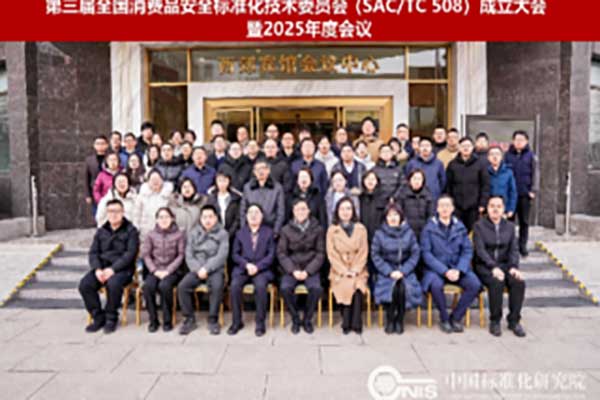
In early July 2025, two consumer product related technical committees under the China National Institute of Standardization (CNIS), SAC/TC508 (Technical Committee on Consumer Product Safety) and SAC/TC 264 (Service), reviewed three important national standards addressing consumer product traceability requirements, product classification and coding frameworks, and general principles for instructions for use.
The standards under review were originally published between 2012 and 2020. Moreover, one of the standards adopted ISO/IEC Guide 37:1995, an international standard which was withdrawn in 2012. These factors together made this round of revisions necessary.
Traceability and Classification Standards
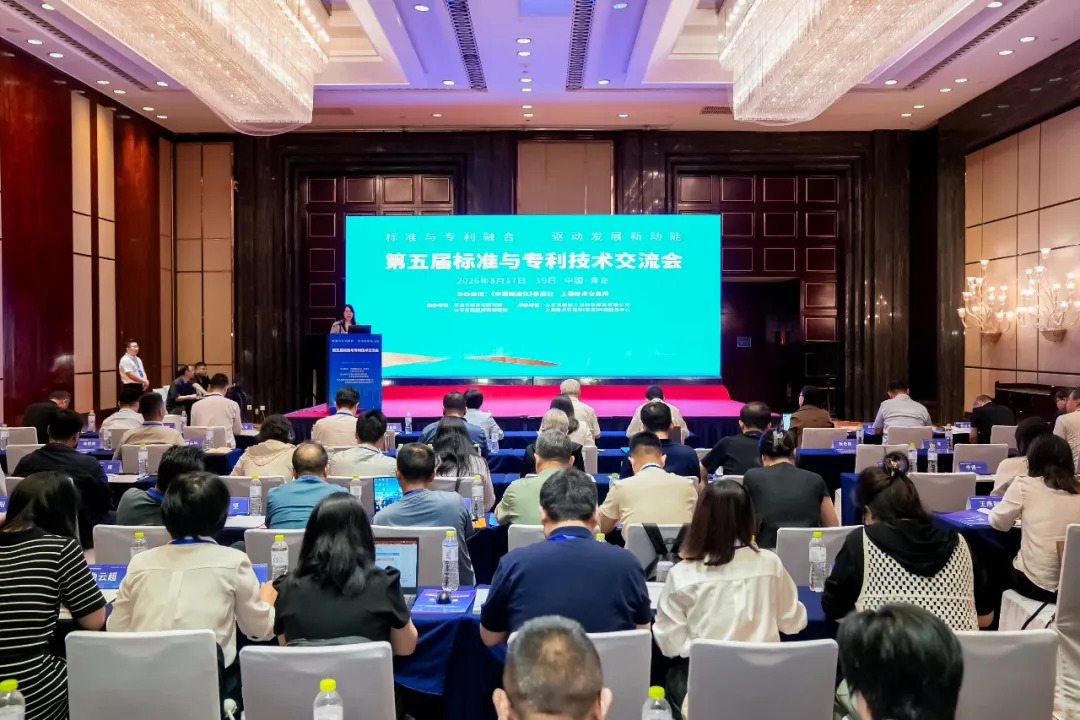
Two national standards were reviewed in a seminar organized by the National Standardization Technical Committee on Consumer Product Safety (SAC/TC508). Experts and drafting representatives from the National Bureau of Statistics, China National Institute of Standardization (CNIS), GS1 China, Chinese Academy of Quality and Inspection & Testing, the Hebei Institute of Standardization, the Guangdong Institute of Standardization, and other organizations participated through a hybrid online and offline format.
Liu Chunhui, Secretary-General of TC508, introduced the revision background, framework structure, key terminology, and technical content of both standards.
- GB/T 39017-2020 Consumer product traceability – General requirements for traceability system– (Revision Project No. 20254899-T-469)
For this standard, experts focused their discussions on terminology definitions, principles, processes, and requirements.
The meeting concluded that this standard, serving as the general rule for the consumer product traceability series, is of great significance. It standardizes traceability system construction, promotes interoperability of traceability information, and enhances the capacity to respond to consumer product quality and safety risks. The standard framework should be optimized according to Plan-Do-Check-Act (PDCA) logic to strengthen its hierarchy and guidance.
- GB/T 36431-2018 Classification and code of consumer products– (Revision Project No. 20252719-T-469)
For this standard, experts exchanged views on classification principles, code structure, application scenarios, and coordination with related standards.
The meeting concluded that this standard is an important foundation for consumer product regulation, statistical analysis, and traceability management. Consumer products are diverse and evolve rapidly. The standard should therefore emphasize foundational, universal, and extensible qualities. It should further optimize the product classification hierarchy and code structure to provide a unified basis for consumer product data sharing and quality and safety supervision.
Consumer Instruction Standard
- GB/T 5296.1-2012 Instructions for use of products of consumer interest – Part 1: General principles– (Revision Project No. 20255479-T-469)
CNIS held a separating meeting to review this national standard developed by SAC/TC 264 (Service). Representatives from the China Consumers Association, the China Association for Consumer Products Quality and Safety Promotion, and the Standard and Technical Regulation Research Center of the General Administration of Customs attended via a hybrid online and offline format.
The current GB/T 5296.1-2012 is the one that adopts the ISO/IEC Guide 37:1995 which was already replaced by ISO/IEC Guide 37:2012. The meeting addressed the issue of using the abolished international standards, as well as focused on the evolving needs for consumer product instructions in the digital and intelligent era. Experts conducted in-depth discussions on the principles and key content for the revision.
There was a consensus that the revised standard should be fully integrated across the entire consumption chain. It should address prominent issues such as reading difficulties among elderly consumers and information asymmetry in cross-border consumption. The goal is to substantially improve the readability and accessibility of instructions for use.
Meanwhile, the revision must be coordinated with updated sub-standards for toys, furniture, and other products to ensure consistency across the entire series of consumer product instructions standards and enhance operability.
These revisions confirm that China is modernizing the obsolete components of its consumer product standards system to bolster regulation and end-to-end traceability. SESEC recommends that European stakeholders stay abreast of this shifting regulatory landscape, with particular attention to product instruction and traceability requirements. Proactive engagement combining close technical study with participation in standards development where feasible, can advance Chinese alignment with international standards and mitigate unnecessary business costs.
Source: