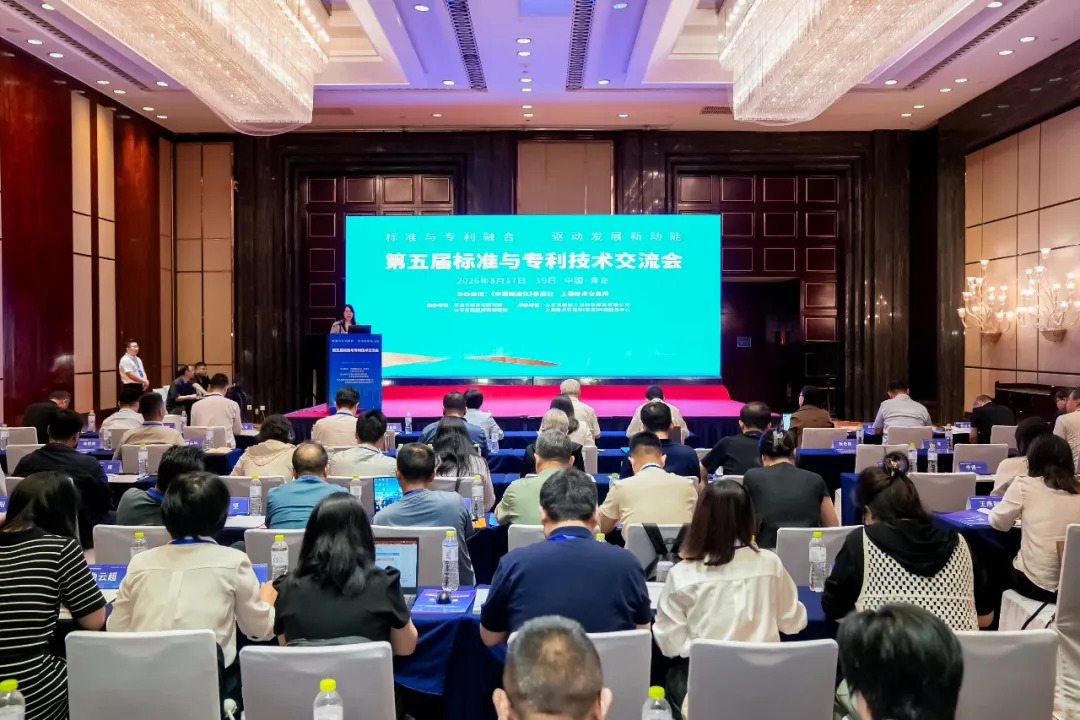
From April 7 to 10, 2026, the National Technical Committee on Integrated Circuits (SAC/TC599) convened a series of annual meetings and working group sessions in Wuhan. This article highlights five of the working groups that held separate meetings to report progress and outline future priorities.
AI Chip Working Group
Guo Nan, Vice President of the China Electronics Standardization Institute (CESI), reported that the working group now comprises 92 research and industry entities. The group has developed a standards system covering five major areas such as foundational and common requirements, core hardware, and software stack, advancing 27 standards since 2025 and issuing 4 sector standards. The meeting also launched a series of AI chip testing standards.
RISC-V Working Group
Also on April 9, the RISC-V Working Group (WG7) released a full-stack testing tool covering instruction sets, firmware, system compatibility, and performance. This tool fills the gap in standardized RISC-V compliance verification in China, supporting large-scale deployment in servers, smart terminals, and automotive electronics. The group has initiated work on 5 national and 19 sector standards.
Chip Application Working Group (Newly Established)
On April 10, the Chip Application Working Group (SAC/TC599/WG10) was formally established. The working group will focus on key sectors including energy, telecommunications, transportation, finance, biomedicine, and home appliances, as well as core scenarios such as power transmission, network communications, and secure payment. Its objectives are to establish a comprehensive chip application standards system, strengthen scenario-based validation, promote collaboration across industry, academia, research, and application, and remove the “last mile” barrier to chip deployment in real-world systems.
Equipment and Components Working Group
On April 10, the Special Equipment and Components Working Group (WG8) released a “roadmap” for its standards system, covering four sub-modules: components, equipment, automation, and foundational standards. The working group launched an industry-wide comparative testing initiative for components, aiming to generate authoritative data for standard-setting and certification. The meeting also approved two new standard proposals, including Guidelines for Establishing Product Security Management System for Semiconductor Manufacturing Equipment and Classification Method for Components Used in Integrated Circuit Manufacturing Equipment.
Chiplet Working Group
Meanwhile, the Chiplet Working Group (WG2), comprising 58 industry entities, reviewed 7 national standards under development, including 3D packaging Chiplet interconnect interface specifications and chiplet testing specifications.
China is building an independent IC standards system across AI chips, RISC-V, chiplets, equipment components, and chip applications, along with corresponding testing capabilities. In the short term, European enterprises hold certain technological advantages in areas such as high-end components, RISC-V IP, and advanced packaging equipment. In the medium to long term, if China’s standards gain traction in Belt and Road markets and beyond, European companies may face increasing pressure to align with or accommodate multiple technical standards.
Source: https://mp.weixin.qq.com/s/eqpd9Wna_50qypvX4aJolg
https://mp.weixin.qq.com/s/rz_5XI7DdtB6Fp9pl-0QJA
https://mp.weixin.qq.com/s/rRR7Fvcmkg1ViALXp_TJzw