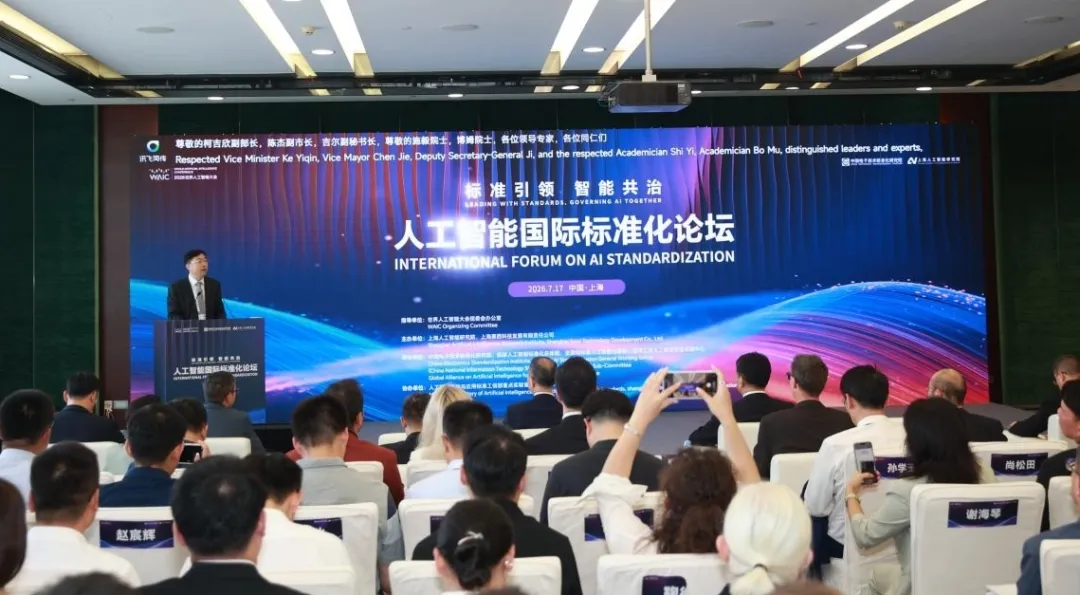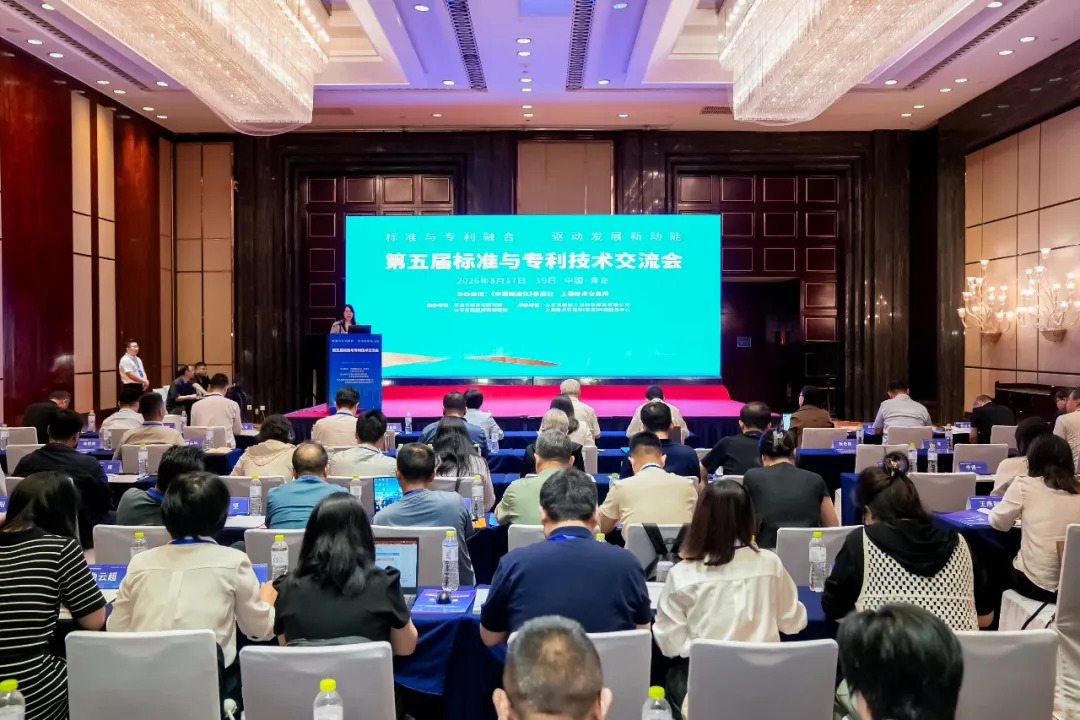
On 9 April 2026, the China Artificial Intelligence Industry Alliance (AIIA) held its 17th Plenary Meeting in Wuhan, Hubei, attracting over 300 participants. Du Guangda, Deputy Director General of the Science and Technology Department at the Ministry of Industry and Information Technology (MIIT), delivered a keynote speech.
Mr. Du noted that China’s core AI industry exceeded RMB 1.2 trillion (€150 billion) in 2025, with more than 6,200 enterprises. He outlined five strategic priorities for MIIT, with manufacturing as the main battlefield and application as the key driver: deepening industry applications, strengthening the development foundation (including computing power and models), improving the industrial ecosystem, reinforcing safety governance, and expanding international cooperation. Additionally, He emphasized that MIIT will develop a new batch of standards alongside promoting high-value scenarios, intelligent agents, and talent cultivation.
Yu Xiaohui, President of CAICT, observed that AI is rapidly entering the AI-native era, characterized by four trends: continued breakthroughs in foundation model capabilities, the rapid rise of intelligent agent frameworks, growing token consumption driving cloud service expansion, and emerging safety risks related to data privacy and permission abuse. He stressed that safety governance must advance in parallel with application deployment.
Wei Kai, Secretary General of MIIT/TC1 (Artificial Intelligence), reported significant progress. MIIT/TC1 now has over 1,000 member organizations and eight working groups. To date, 23 sector standards have been issued, and 261 standards are currently under pre-standardization research or proposed as formal projects. Key focus areas include embodied intelligence, large model evaluation, industry boundary definition, and safety governance. Notably, China’s first sector standard on embodied intelligence was recently released. Standards defining AI industry boundaries and enterprise classification have also been approved.
Nan Xinsheng, Vice Chair of CCSA TC602, introduced that, as a dedicated pre-standardization body for AI with 14 working groups, CCSA TC602 will collaborate with MIIT/TC1 and AIIA to establish a full-chain standards mechanism. A call for pre-standardization papers was launched; mature outcomes will support MIIT/TC1 sector standards or be transformed into CCSA association standards.
The plenary meeting also saw the inauguration of three new working groups, focused respectively on AI-native technologies, intelligent transport and autonomous driving, and intelligent terminals.
For European stakeholders, it is worth noting that this takes place against the backdrop of an intensifying AI standards race within China. AIIA will act as a critical link between industry and MIIT, reducing understanding gaps and elevating the status of sector standards as strategic tools for China’s AI industry development.