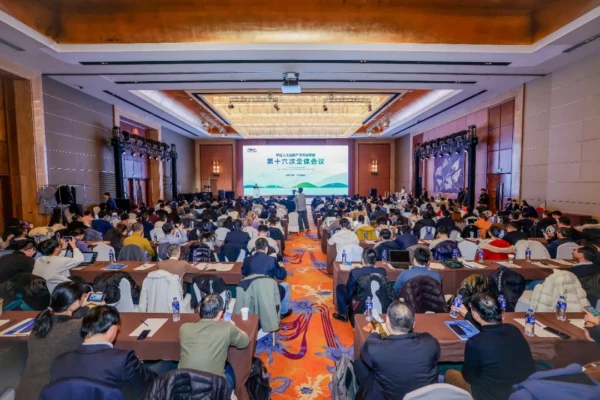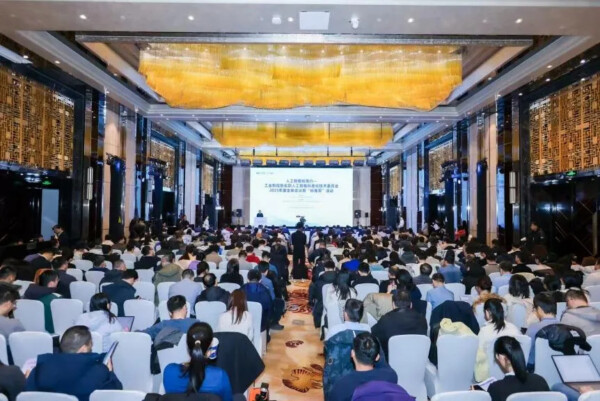
On 7 January 2025, the Ministry of Industry and Information Technology (MIIT) and 7 other departments has jointly issued the Implementation Opinion on the “Artificial Intelligence + Manufacturing” Special Action. This document establishes a strategic roadmap to deepen the integration of AI with the real economy by 2027, fostering new-quality productive forces and advancing new-type industrialization.
The 7 other departments involved are:
- Cyberspace Administration of China (CAC)
- National Development and Reformation Commission (NDRC)
- Ministry of Education (MOE)
- Ministry of Commerce (MOC)
- State-owned Assets Supervision and Administration Commission of the State Council (SASAC)
- State Administration for Market Regulation (SAMR)
- National Data Administration (NDA)
The policy outlines 4 strategic objectives:
- By 2027, achieve a safe, secure and trustworthy supply of key and core technology; maintain global leadership in industrial scale and AI integration depth.
- Promote deep integration of 3-5 general-purpose large models; develop industry-specific large models covering entire value chain; deploy 1000 high-level industry AI agents; build 100 high-quality domain-specific industry datasets, and identify 500 representative AI application scenarios.
- Cultivate 2-3 ecological leading enterprises and a cohort of “Little Giant” SMEs; foster a group of AI-empowerment service providers with dual expertise in AI technologies and targeted industrial domains; and select 1000 model enterprises for replication and scaling.
- Establish world-leading open source and open ecosystem; promote all-round improvement of AI Safety Governance capabilities; and promote China’s AI solution to the world.
To achieve these goals, the policy proposes 21 measures across 7 dimensions aspects:
- Foundation: Consolidate foundational infrastructure by enhancing computing power, developing industry-specific models, and implementing a “Model-Data Resonance” mechanism with Chief Data Officer systems.
- Applications: Extend intelligent transformation across the entire industrial value chain by promoting comprehensive application scenarios from R&D to operations.
- Equipment & Agents: Drive industrial AI adoption through the iteration of intelligent equipment, the upgrade of smart terminals, and breakthroughs in key technologies for industrial agents.
- Entities & Services: Cultivate a tiered ecosystem of global leaders and specialized SMEs supported by national innovation centers, pilot bases, and cross-sector service providers delivering standardized solutions.
- Ecosystem & Talent: Strengthen the industrial ecosystem by advancing safety and interoperability standards, fostering open-source communities, and bridging the AI-manufacturing skills gap through specialized talent academies.
- Safety & Governance: Enhance security capabilities via advanced algorithm protection and hallucination reduction technologies while establishing a comprehensive governance mechanism for risk classification and emergency response.
- Global & Support: Facilitate global expansion through customized solutions and compliance support, deepen international cooperation via multilateral forums, and secure implementation with coordinated funding, demonstration policies, and dynamic market monitoring.
Standardization serves as a critical enabler throughout this framework. The document identifies national standards on data management capability maturity as the cornerstone for constructing key infrastructure that supports AI integration.
Specific technical committees including MIIT TC01 for AI, TC609 for Data Standardization, TC28/SC42 for AI, TC599 for AI Chips, and TC260 for Emerging Technology Security are tasked with strengthening cross-sector cooperation. Their mandate includes developing foundational standards for safety, governance, and ethics; creating generic standards for software-hardware adaptation through a classified approach; and researching AI-empowered application standards and metrology specifications. Furthermore, the policy emphasizes the need for standards to govern industrial dataset structures, software development, and data quality evaluation, while actively encouraging enterprise participation in international standardization.
To assist implementation, two annexes were introduced: the Guidelines for the Transformation of Key Industries in Manufacturing Empowered by AI and the Guidelines for AI Application in Manufacturing Enterprises. The former provides industry-specific roadmaps for integrating AI into R&D, production, supply chains, and services across 16 key sectors, including raw materials, electronics, equipment manufacturing, automotive, consumer goods, and IT services. The latter offers a general framework for individual enterprises to assess their AI maturity regardless of sector.
European stakeholders must recognize that China’s new AI manufacturing policy demands deep structural localization rather than mere product adaptation. The policy mandates mechanisms that align local data governance with Chinese national standards to facilitate access to critical industrial datasets. Consequently, market participation will increasingly rely on integration into the domestic ecosystem defined by these Chinese solutions. As specific TCs are explicitly named in the policy, SESEC recommends that European stakeholders proactively engage in their standardization drafting processes to promote technological interoperability and reduce compliance costs.
Source: https://wap.miit.gov.cn/zwgk/zcwj/wjfb/tz/art/2026/art_01010414608a4226b30687773bb21bdf.html