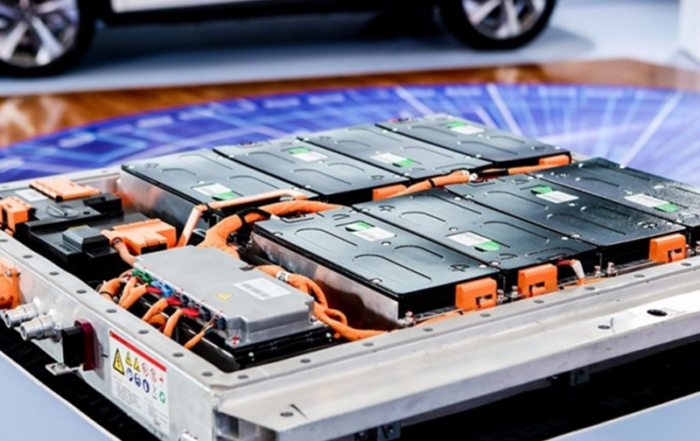

On January 16, 2026, the Ministry of Industry and Information Technology (MIIT), the National Development and Reform Commission (NDRC), the Ministry of Ecology and Environment (MEE), the Ministry of Transport, the Ministry of Commerce, and the State Administration for Market Regulation (SAMR) jointly issued the Interim Measures for the Management of Recycling and Comprehensive Utilization of Waste New Energy Vehicle (NEV) Traction Batteries. The regulation, taking effect on April 1, 2026, replaces previous policy documents with a legally binding framework to ensure safe, efficient, and sustainable recycling. This initiative responds to the Action Plan for Improving the Recycling and Utilization System of NEV Traction Batteries released in February 2025 and the onset of large-scale retirement of NEV traction batteries.
The regulation introduces two fundamental principles: balancing development with safety/environmental protection and enforcing Extended Producer Responsibility (EPR). To address regulatory challenges across the complex NEV battery lifecycle, the Measures adopt a “whole channel, whole chain, whole lifecycle” approach. First, they implement source control and formulate a “vehicle-battery co-retirement” rule requiring end-of-life NEVs to be scrapped with batteries intact (excluding battery-swapping models). Second, they assign clear responsibilities to all players across production, maintenance, dismantling, and recycling stages. Third, they establish lifecycle traceability by building a national NEV Traction Battery Traceability Information Platform and a “Digital ID” system for traction batteries. To implement the “Digital ID” system, the regulation also set forth requirements for information reporting, regulated data query and application, and enhanced data security protection.
NEV and traction battery producers bear two core EPRs:
- Eco-design: Battery producers shall prioritize eco-design, code batteries according to GB/T 34014-2017 Coding regulation for automotive traction battery, and provide battery codes and disassembly technical information; NEV manufacturers shall use easily removable battery components and publicly disclose maintenance technical information.
- Tack-back accountability: Battery producers must establish or commission tack-back networks at the provincial level matching their sales volumes according to GB/T 38698.2 Recovery of traction battery used in electric vehicle-Management specification-Part 2: Take-back service network, disclose tack-back information, and ensure compliant transfer of batteries they produce or import. NEV manufacturers must do likewise at the city/prefecture level for batteries from vehicles they sold.
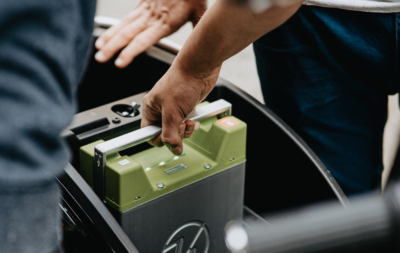
To strengthen sector management, the regulation introduces key changes for recyclers. First, the scope of “comprehensive utilization” is redefined to specify that it refers to activities aimed at resource recovery through processes such as dismantling, crushing, sorting, and smelting. Stricter entry conditions are set: companies must complete investment approvals or filing for construction projects, environmental impact assessments, and obtain pollutant discharge permits to operate. Notably, the term “echelon use” is abandoned. The regulation now explicitly prohibits using waste traction batteries, directly or processed, in e-bikes or any other applications forbidden by laws and compulsory standards.
Concurrently, China is accelerating standardization for NEV battery recycling to support industry development. Nearly 30 national standards covering areas from general requirements to recycling processes have been issued to improve the standards system for the recycling and utilization of traction batteries. A new “National Technical Committee on Traction Battery Recycling Standardization” is being established to unify efforts across sectors including materials, production, and dismantling. Standards implementation is already delivering results: some recyclers now achieve recovery rates of 99.6% for nickel, cobalt, and manganese, and 96.5% for lithium. Competent authorities will continue rapid standard development, ensuring alignment with industrial policies to drive high-quality growth in battery recycling.
Source: https://wap.miit.gov.cn/xwfb/xwfbh/bxwfbh/art/2026/art_c5c9031e409e468eb4004d82fd394241.html