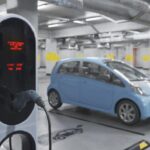

On January 1, 2026, China’s landmark mandatory national standard for electric vehicle (EV) energy consumption comes into force. The standard, titled GB 36980.1 – 2025 Energy consumption limits for electric vehicles – Part1: Passenger cars, was published on May 30, 2025 by the State Administration for Market Regulation (SAMR) and the National Standardization Administration (SAC) to replace the 2018 recommended version (GB/T 36980-2018) and introduce stricter requirements. It aims to stimulate advancements in EV energy-saving technology, elevate overall vehicle efficiency, and phase out high-consumption models. This is how it will provide critical support for the industry’s carbon peaking goals and align with national initiatives to promote vehicle trade-ins and foster high-quality development within the new energy vehicle (NEV) industry.
Specifically, the standard applies to all pure electric M1-class passenger vehicles with a maximum design total mass not exceeding 3,500 kg. Moreover, it formally mandates type-approval application and verification procedures, energy consumption limits, production consistency checks, and “same-type” vehicle determination rules, bringing a more rigorous and enforceable management regime. Notably, the standard sets energy consumption limits tailored to vehicle weight, based on a comprehensive assessment of current EV energy use, the potential for energy-saving technologies, cost considerations, and the performance of specialized vehicle models. Compared to the previous recommended standard, the limits are tightened by approximately 11%. Additionally, the standard introduces differentiated requirements that account for variations in energy consumption due to different usage patterns and technical characteristics, effectively addressing the need for diversified vehicle development while providing clear guidance for future R&D and application of energy-saving technologies.
Following the implementation of the new standard, manufacturers will need to undertake necessary technical upgrades for newly produced vehicles. For instance, a vehicle weighing around two tonnes will be subject to a limit of no more than 15.1 kWh per 100 kilometers. Following such upgrades, EVs are expected to achieve an average range increase of about 7% without any change in battery capacity, leading to a tangible improvement in the driving experience for end-users. The phased implementation allows new vehicle models seeking type approval to comply from the effective date, while models already approved have a transition period of 25 months (from January 1, 2028) to adapt.
This standard will operate in synergy with other key standards such as GB 27999 Fuel consumption evaluation methods and targets for passenger cars and GB 19578 Fuel consumption limits for passenger cars, to jointly form the regulatory framework for passenger vehicle energy efficiency management leading up to 2030. For foreign stakeholders, the mandatory standard necessitates technical upgrades to meet stricter limits but also signals a shift toward efficiency-driven competition. Proactive adaptation can transform compliance into a long-term competitive advantage within China’s decarbonizing automotive market.
Chinese sources of the article: https://www.sac.gov.cn/xw/bzhdt/art/2025/art_634edaa0dfc94955af0ba2f2965cef2c.html
https://wap.miit.gov.cn/jgsj/zbys/qcgy/art/2025/art_942c05f7e7254ccdab2d974bbf0ed687.html