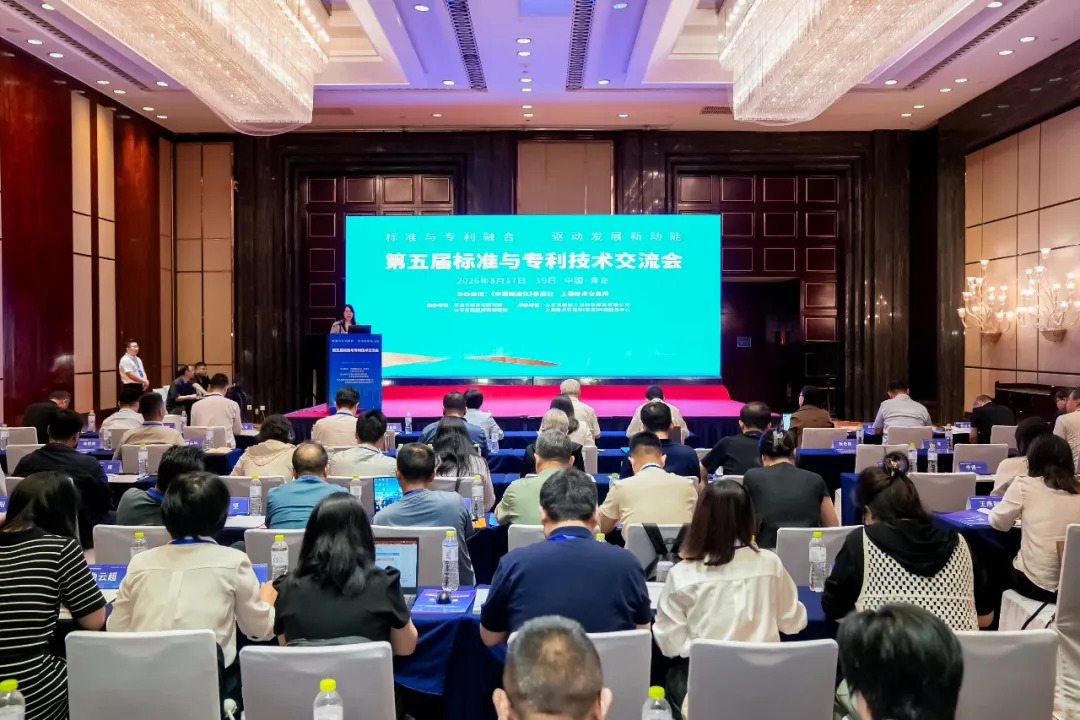
On May 26, 2026, the State Administration for Market Regulation (SAMR) held a press conference on the upgrade of national standards in key sectors including building materials, machinery and petrochemicals. According to the conference, significant progress has been made in upgrading standards for these three traditional industries, which serve as the cornerstone of China’s national economy. Since the start of 2025, China has issued a total of 1,327 relevant national standards, including 622 newly developed standards and 705 revised standards.
A breakdown by industry shows that, for building materials, 123 national standards have been rolled out to support green materials adoption and construction energy efficiency. For machinery, 201 standards aim to boost high-end equipment, smart manufacturing, key processes and basic components. For petrochemicals, 323 standards focus on supply chain coordination, safety and resource recycling. For light industry, 140 standards target quality improvements in home appliances, furniture and children’s products, as well as the green consumption upgrading. And for steel, 119 standards support energy conservation, carbon reduction and industrial transformation.
The latest figures mark progress in a broader initiative launched by the SAMR in 2025 to upgrade standards across traditional industries including building materials, machinery, petrochemicals, metallurgy, light industry, textiles, automobiles and shipbuilding. The program, which calls for formulating or revising more than 4,300 national standards over three years, is designed to support the high-end, digital and green transformation of these sectors. It systematically identifies standard needs across critical links, key areas and core products within industrial chains.
The initiative follows directives from the Third and Fourth Plenary Sessions of the 20th Central Committee of the Communist Party of China, which called for using national standards to steer the optimization and upgrading of traditional industries. At the heart of this push is the recognition that traditional industries are now at a critical stage, shifting from scale-driven expansion to quality-driven growth. In this context, standards serve as the technical foundation of industry and a powerful tool for structural adjustment and enhancing competitiveness.
For European stakeholders, China’s standards upgrade signals more than regulatory change – it reflects a structural shift in how the country defines industrial competitiveness. Stricter compliance and green metrics are raising supply chain barriers, while standard-setting in high-end equipment and digital manufacturing is reshaping market dynamics. European companies may need to align with the evolving framework to stay competitive, while exploring collaboration in green and smart manufacturing.
Source: https://www.sac.gov.cn/xw/bzhdt/art/2026/art_914f6c4700b545a780b9c8129e4b171d.html
https://www.samr.gov.cn/xw/xwfbt/art/2026/art_631274a3c04e4e138abc980143beb682.html