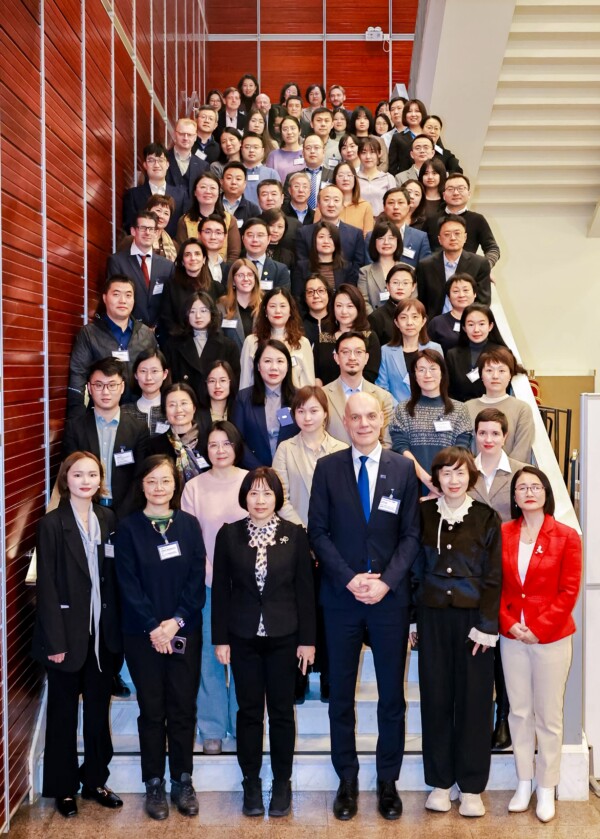
On 5 February 2026, the Seconded European Standardization Expert for China (SESEC) successfully convened the 2026 EU–China Standardization Roundtable and New Year Reception in Beijing. The event brought together representatives from European and Chinese standardization bodies, government authorities, industry associations, technical committees, and leading enterprises to exchange views on policy developments, strategic priorities, and future cooperation in standardization and technical regulation.
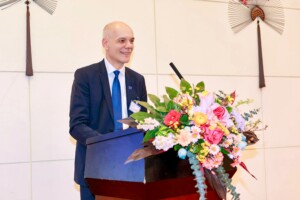
The event opened with welcoming remarks from Mr. Jorg Weberndorfer, Minister Counsellor for Industrial and SME Policies, Trade and Investment Section, Delegation of the European Union to China. Mr. Weberndorfer highlighted the long-standing achievements of EU–China standardization cooperation and underlined the potential for further collaboration, particularly in the context of the digital and green transitions. He emphasized that standards play a crucial role in supporting innovation, competitiveness, and market access, and are an indispensable foundation for sustainable economic development.
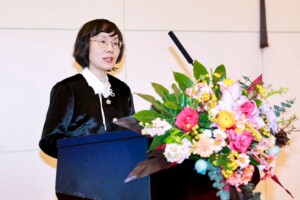
Representing the Chinese side, Ms. Chen Ying, Director of the International Cooperation Division, Standardization Innovation Department of the State Administration for Market Regulation (SAMR), delivered remarks on China’s latest standardization developments. She outlined China’s strategic direction in advancing a modern, high-quality standardization system and praised SESEC’s important role in facilitating communication between European and Chinese stakeholders and supporting practical cooperation.
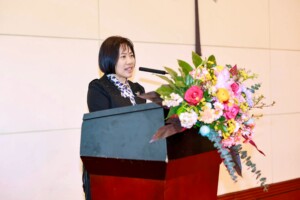
A highlight of the reception was the keynote briefing by Madam Li Aixian, Vice President of the China National Institute of Standardization (CNIS). Madam Li provided a comprehensive overview of China’s standardization system, its evolution, and its growing engagement in international standardization. Specifically, she highlighted the need to centralize and streamline the national standards system to enhance its coherence and efficiency; concurrently, she stressed that China’s standardization work must be anchored in technological self-reliance to underpin high-quality development. Additionally, Madam Li noted that while China contributes over 14,000 experts to ISO standards development, their representation in leadership positions remains limited, which will be addressed as a key focus for future growth.
Madam Li Aixian is a highly respected authority in the field. Notably, on 15 October 2025, she was invited to deliver a high-level presentation on standardization to China’s senior state leaders during the State Council’s 16th special study session, chaired by Premier Li Qiang, under the theme “Strengthening the guiding and safeguarding role of standards and promoting high-quality economic development through standards upgrading.” Her participation at the SESEC reception provided first-hand insights into China’s latest policy thinking and strategic priorities.
Dr. Betty Xu, SESEC, presented an overview of recent and upcoming EU standardization policy developments, including the EU Standardization Strategy and revisions to the EU Standardisation Regulation. She also highlighted SESEC’s work in monitoring policy trends, supporting EU stakeholders, and identifying cooperation opportunities with Chinese counterparts.
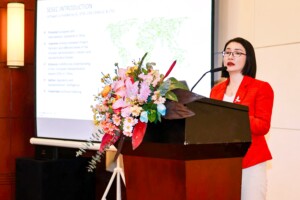
Ms. Ester Canada, representing the European Chamber of Commerce in China’s Standards and Conformity Assessment Working Group, shared key messages from the Chamber’s annual position paper, reflecting European industry’s main concerns and recommendations regarding standards, conformity assessment, and market access in China.

Mr. Benjamin de Ville, Secretary of CEN-CENELEC JTC 24 on Digital Product Passport (DPP), provided an update on European standardization work related to DPP and its relevance for circular economy, sustainability, and supply chain transparency. He outlined ongoing activities at European and international levels and stressed the importance of early dialogue with international partners.
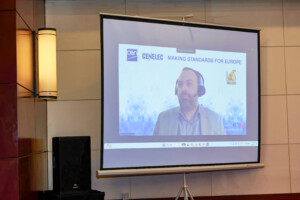
On the Chinese side, experts from from China Certification & Accreditation Institute (CCAI) and CNIS introduced China’s carbon footprint policy framework, certification pilots, and the development of the “dual-carbon” (carbon peaking and carbon neutrality) standard system. These presentations generated strong interest among participants, reflecting the growing importance of carbon footprint methodologies and sustainability standards for global value chains.
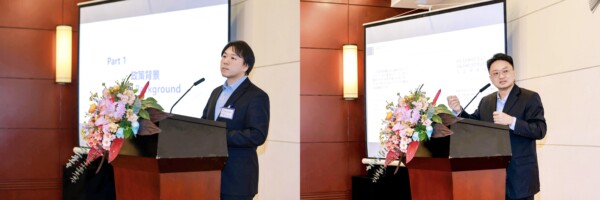
The event attracted around 80 participants, including representatives from SAMR, SAC, CNCA, the National Railway Administration (NRA), Chinese research institutes such as CNIS, CESI and CCSA, Chinese technical committees, as well as European embassies, EU organizations in Beijing, and European companies including Siemens, Schneider Electric, Ericsson, Nokia, ABB, TÜV and IKEA etc,. The diverse participation underscored the strong demand for dialogue and practical cooperation in standardization between Europe and China.
SESEC reaffirmed its commitment to continuing its role as a central platform for EU–China standardization cooperation. Looking forward, SESEC will further strengthen policy dialogue, support technical exchanges between standardization bodies and technical committees, and promote greater alignment and transparency in key sectors such as digital technologies, artificial intelligence, cybersecurity, energy, batteries, carbon footprinting and the circular economy.
By fostering mutual understanding and trust, SESEC will continue to contribute to reducing technical barriers to trade, supporting innovation, and building a more open, resilient and sustainable future for EU–China cooperation in standardization.